Showing posts with label 8 Uniform Reichswehr. Show all posts

Monday, April 27, 2026

Bio of General der Infanterie Friedrich Schulz (1897-1976)


Full name: Karl Friedrich Wilhelm Schulz
Nickname: Fritz

Date of birth: 15 October 1897 - Nettkow, Landkreis Grünberg, Silesia (German Empire)
Date of death: 30 November 1976 - Freudenstadt, Baden-Württemberg (West Germany)

Religion: Protestant  
Parents: His father was a goods manager in the Nettkow area of Silesia. Information on his mother is not widely documented in public sources.  
Siblings: No confirmed information on siblings is available in standard biographical records.  
Spouse: Schulz married Margarete Teichmann on 10 June 1922. She died in 1945. He remarried Luitgard Kohlrausch on 16 October 1948. She died in 2015 at age 96 and is buried with him.  
Children: Two daughters from his first marriage, born in 1923 and 1930 respectively. No further public details on their lives are available.

Promotions:
26th June 1916: Leutnant (promoted on 9th August 1916);
1st October 1919: Leutnant (effective from 1st October 1915);
1st August 1925: Oberleutnant (effective from 1st April 1925);
1st November 1931: Hauptmann;
1st January 1936: Major;
1st February 1939 Oberstleutnant (effective from 1st February 1938);
1st April 1941: Oberst;
1st July 1942: Generalmajor;
1st July 1943: Generalleutnant;
1st April 1944: General der Infanterie;

Career:
19th September 1914: Entered service as Kriegsfreiwilliger and was assigned to IR von der Goltz (7. Pommersches) Nr. 54 as Fahnenjunker;
26th June 1916: Leutnant in (3. Posensches) IR Nr. 58;
Grenzschutz Schlesien in 6. / Infanterie-Regiment 8, Glogau and later with the Reichswehr-Infanterie-Regiment 8;
11th March - 16th March 1919: Wehrkreisprüfung;
1st October 1920: Infanterie-Regiment 8;
1st October 1926: Adjutant III. / Infanterie-Regiment 8, Görlitz;
1st October 1930: Führergehilfenausbildung;
1932: Stab 4.Division, Dresden;
1st September 1933: Generalstab, RWM;
1st October 1934: Kompanie-Chef Infanterie-Reigment 30;
15th October 1935: Ia 23.Infanterie-Division;
1st October 1937 - 20th April 1940: Stab Oberkommando der Wehrmacht, Gruppenleiter II (Organisation) / Abteilung L / Wehrmachtführungsamt;
20th April 1940 - 24th April 1942: Chef des Generalstabes, XXXXIII.Armee-Korps;
12th May 1942 - 21th November 1942: Chef des Generalstabes, 11.Armee;
21sh November 1942 - 12th February 1943: Chef des Generalstabes, Heeresgruppe Don;
12th february 1943 - 1st March 1943: Chef des Generalstabs der Heeresgruppe Süd;
1st May 1943 - 1st December 1943: Kommandeur 28.Jäger-Division;
28th November 1943 - 1st January 1944: Kommandierender General (m.d.F.b.) III.Panzer-Korps;
8th February 1944 - 21nd March 1944: Kommandierender General LIX.Armee-Korps;
22nd March 1944 - 3rd July 1944: Kommandierender General (m.d.F.b. until 31st March 1944, then permanent from 1st April 1944) XXXXVI.Panzer-Korps;
25th July 1944 - 25th March 1945: Oberbefehlshaber 17.Armee;
5th April 1945 - 29th April 1945: Oberbefehlshaber Heeresgrupe G;
29th April 1945: send to Italy bu Generalfeldmarschall Kesselring;
30th April 1945: Oberbefehlshaber Südwest;
3rd May 1945 - 5th May 1945: Oberbefehlshaber Heeresgruppe G;
6th May 1945 - 1946: Prisoner of War U.S. Army.

Awards and Decorations:
Eisernes Kreuz 1914 2. Klasse (2 June 1916)  
Eisernes Kreuz 1914 1. Klasse (27 January 1918)  
Verwundetenabzeichen 1918 in Schwarz  
Ehrenkreuz für Frontkämpfer 1914/1918 mit Schwertern (1934)  
Wehrmacht-Dienstauszeichnungen 4. Bis 1. Klasse  
Spange zum Eisernen Kreuz 2. Klasse 1939 (6 April 1940)  
Spange zum Eisernen Kreuz 1. Klasse 1939 (14 June 1940)  
Ostmedaille  
Krimschild  
Ritterkreuz des Eisernen Kreuzes (29 March 1942) as Oberst im Generalstab and Chef des Generalstabes XXXXIII. Armeekorps, for defensive actions near Kaluga. In the harsh winter of 1941–1942, during the Soviet winter offensive near Kaluga southwest of Moscow, the XXXXIII. Armeekorps faced repeated heavy attacks from superior Red Army forces. As chief of staff, Schulz played a central role in planning and coordinating the corps’ defensive operations. Under extreme cold, supply shortages, and constant pressure, he helped organize flexible withdrawals, counterattacks, and the holding of key positions that prevented a complete breakthrough. His clear operational planning and tireless work in stabilizing the front contributed decisively to the corps’ ability to maintain cohesion and inflict significant losses on the attacking enemy. For these achievements in defensive leadership during the critical winter battles, he received the Ritterkreuz.
Orden Michaels des Tapferen III. Klasse (6 October 1942)
Mentioned in Wehrmachtbericht (14 March 1944)
Ritterkreuz des Eisernen Kreuzes mit Eichenlaub #428 (20 March 1944) as Generalleutnant and Kommandierender General (mit der Führung beauftragt) III. Panzerkorps, for leadership near Cherkassy. In late 1943 and early 1944, during the intense defensive battles around Cherkassy (Korsun Pocket) on the southern sector of the Eastern Front, Schulz temporarily took acting command of the III. Panzerkorps. Soviet forces launched powerful assaults aimed at encircling and destroying German units in the pocket. Under his leadership, the corps conducted skillful mobile defense and counterattacks amid muddy terrain, limited fuel, and overwhelming enemy numbers. Schulz directed coordinated tank and infantry actions that helped relieve pressure on trapped forces, facilitated breakout attempts, and stabilized threatened sectors. His energetic personal leadership and tactical decisions enabled the corps to hold key ground longer than expected and extract valuable combat power despite the dire situation. These actions in the Cherkassy fighting earned him the Eichenlaub.  
Ritterkreuz des Eisernen Kreuzes mit Eichenlaub und Schwertern #135 (26 February 1945 as General der Infanterie and Oberbefehlshaber 17. Armee, for defense of Upper Silesia. In February 1945, as commander-in-chief of the 17. Armee within Heeresgruppe Mitte, Schulz directed the defense of the vital Upper Silesian industrial region. Following the Soviet breakthrough near Liegnitz during the Lower Silesian Offensive, massive Red Army forces threatened to overrun the area and its critical coal mines and factories. Schulz rapidly reorganized his depleted units, personally inspiring troops through example and energetic command. He established a new defensive line where repeated Soviet attacks were repelled with heavy enemy losses. Despite severe shortages of manpower, ammunition, and fuel, his forces conducted stubborn delaying actions and successful local counterattacks that slowed the Soviet advance and preserved part of the industrial heartland longer than anticipated. His capable leadership turned a potential collapse into an orderly defense that bought precious time for German operations elsewhere. For this outstanding performance in the Upper Silesian battles, he was awarded the Schwerter.

-----------------------------------------------------------------------------------------------

Karl Friedrich Wilhelm Schulz, commonly known as Fritz Schulz, was a German general of infantry in the Wehrmacht during the Second World War. Born on 15 October 1897 in Nettkow in the Province of Silesia within the Kingdom of Prussia, he rose through the ranks from a young volunteer in the First World War to one of the senior field commanders on the Eastern Front in the final desperate months of the conflict. Schulz demonstrated a combination of meticulous staff work and energetic frontline leadership that earned him rapid promotions and Germany's highest military decorations. He served continuously from 1914 until the collapse of the Third Reich in 1945, surviving the war to live quietly in West Germany until his death on 30 November 1976 in Freudenstadt, Baden-Württemberg.

Schulz entered military service on 19 September 1914 as a war volunteer and officer candidate with Infanterie-Regiment von der Goltz (7. Pommersches) Nr. 54. He transferred to (3. Posensches) Infanterie-Regiment Nr. 58, where he was commissioned as Leutnant in June 1916. During the First World War he fought on both the Western and Eastern fronts, suffering wounds that earned him the Wound Badge in Black. He received the Iron Cross Second Class in 1916 and First Class in 1918 for bravery under fire. After the armistice he participated in border defense duties in Silesia with Grenzschutz units and later joined the Reichswehr, serving with Infanterie-Regiment 8. His early career in the small professional army of the Weimar Republic included adjutant duties, general staff training, and various staff positions that prepared him for higher responsibilities.

In the years leading to the Second World War, Schulz advanced steadily through the ranks while holding key organizational and planning roles. He became Hauptmann in 1931, served as company commander in Infanterie-Regiment 30, and acted as first general staff officer of the 23. Infanterie-Division. By 1937 he had risen to Gruppenleiter for organization matters in the Wehrmachtführungsamt at the Oberkommando der Wehrmacht. Promoted to Major in 1936 and Oberstleutnant in 1939, he brought calm professionalism and thorough planning skills to increasingly demanding positions. When war broke out in 1939, his experience placed him in critical staff roles that shaped operations on multiple fronts.

Schulz first gained widespread recognition during the harsh winter battles of 1941-1942 on the central sector of the Eastern Front. As Oberst and chief of staff of the XXXXIII. Armeekorps, he coordinated defensive efforts near Kaluga southwest of Moscow against repeated Soviet winter offensives. Under conditions of extreme cold, frozen equipment, and severe supply shortages, the corps faced relentless attacks by superior Red Army forces attempting to shatter the German line. Schulz helped organize flexible withdrawals, timely counterattacks, and the stubborn defense of key strongpoints that prevented a decisive breakthrough. His clear operational planning and tireless coordination stabilized threatened sectors and inflicted heavy losses on the enemy, actions that directly contributed to the award of the Knight's Cross of the Iron Cross on 29 March 1942.

Later in the war Schulz transitioned from staff duties to direct field command, facing some of the most intense fighting of the Eastern campaign. In late 1943, as Generalleutnant, he took acting command of the III. Panzerkorps during the critical battles around Cherkassy in Ukraine. Soviet forces launched powerful assaults aimed at encircling German units in the Dnieper bend area, creating muddy quagmires that hampered movement while artillery and tank attacks pounded German positions. Under Schulz's leadership the corps conducted skillful mobile defense, launching localized armored counterthrusts that disrupted Soviet advances and bought time for threatened formations. His energetic direction helped maintain cohesion amid logistical strain and overwhelming enemy pressure in the prelude to the larger Korsun-Cherkassy pocket, earning him the Oak Leaves to the Knight's Cross on 20 March 1944 as the 428th recipient.

In the final year of the war Schulz rose to army-level command during the Soviet winter offensives of 1945. As General der Infanterie and commander-in-chief of the 17. Armee from July 1944, he was responsible for defending the vital Upper Silesian industrial region with its coal mines and factories essential to the German war effort. Following a major Soviet breakthrough near Liegnitz in February 1945, massive Red Army tank and infantry columns threatened to overrun the area in a rapid advance. Schulz rapidly reorganized depleted divisions, established new defensive lines, and personally inspired his exhausted troops through visible leadership and decisive orders. His forces repelled repeated Soviet attacks with determined resistance and local counterattacks, inflicting heavy casualties and slowing the enemy momentum despite critical shortages of men, ammunition, and fuel. These actions preserved parts of the industrial heartland longer than expected and demonstrated outstanding defensive skill, leading to the award of the Swords to the Knight's Cross on 26 February 1945 as the 135th recipient.

In the chaotic last weeks of the war Schulz briefly commanded higher formations, including Heeresgruppe G and temporary oversight of operations in southern Germany and Italy under Generalfeldmarschall Albert Kesselring. Captured by American forces in May 1945, he spent time as a prisoner of war before his release in 1948. Unlike many of his contemporaries, he avoided public controversy or further military involvement in the postwar era. Schulz lived a private life in West Germany, remembered primarily by military historians for his progression from capable staff officer to resilient army commander in the most demanding defensive battles of the Eastern Front. His decorations and career reflect the heavy burdens placed on German generals in the later stages of the conflict.


Source:
Fellgiebel, Walther-Peer: Die Träger des Ritterkreuzes des Eisernen Kreuzes 1939-1945.  
Elite of the Third Reich by W.P. Fellgiebel and related Wehrmacht command studies.  
https://en.wikipedia.org/wiki/Friedrich_Schulz  
https://www.tracesofwar.com/persons/34588/Schulz-Karl-Friedrich-Fritz-Wilhelm.htm  
https://ww2gravestone.com/people/schulz-karl-friedrich-fritz-wilhelm/  
https://www.lexikon-der-wehrmacht.de/  
https://rk.balsi.de/  
https://www.geni.com/  
https://forum.axishistory.com/  
https://www.wehrmacht-awards.com/forums/  
https://www.unithistories.com/  
Archived Geocities material via web.archive.org (orion47)  
https://grokipedia.com/  

Thursday, June 27, 2024

Otto Hartmann as Reichswehr Oberstleutnant


Otto Hartmann as an Oberstleutnant (Lieutenant-Colonel). He was promoted from Major to Oberstleutnant on 1 November 1930, and to Oberst on 1 April 1933. After served as an advisor in the Abwehr-Department followed by the position as a staff officer of the 7th Artillery-Regiment, in July 1932 Hartmann was detached to 'Foreign Armies' ('Fremde Heere') Department. In this picture, he is wearing "Offizier im Generalstab Kolbenstickerei" (collar tabs of general staff officer).

Source :
https://www.andreas-thies.de/auctions/82-753668

Sunday, June 2, 2024

Hasso von Manteuffel as an Oberleutnant


Oberleutnant Hasso von Manteuffel as a Reichswehr officer. He was promoted from Leutnant to Oberleutnant on 31 July 1925 (patent 1 April 1925) while served as a Regiments-Adjutant of 3.(preussische) Reiter-Regiment. Amazingly, the next promotion to Rittmeister (Cavalry Captain) would take place 12 years later in 1933!

Source :
https://www.ebay.de/b/General-in-Militaria-Fotos-1900-1918-1945/15504/bn_7004515776

Saturday, January 13, 2024

Ferdinand Schörner Leading His Company (1920)


Handwritten postcard to Johann Schörner, dated 14 April 1920. With his own signature: "Ferdinand". Front photo of the parade march of the 11th Company on 10 April 1920 in Dortmund with Oberleutnant Ferdinand Schörner (Führer 11. Kompanie / 1.Bayerischen Reichswehr-Schützen-Regiment 41 / Schützen-Brigade "Epp") at the head.


Source :
https://www.andreas-thies.de/auctions/49-749225

Monday, January 1, 2024

Bio of Generalleutnant Kurt-Jürgen Freiherr von Lützow (1892-1961)

Kurt-Jürgen Henning Bruno Robert Freiherr von Lützow

Date of Birth: 07.08.1892 - Marienwerder, Westpreußen (German Empire)
Date of Death: 20.07.1961 - Hannover, Niedersachsen (West Germany)
Buried: Stadtfriedhof Seelhorst, Hannover

Battles and Operations: Invasion of Poland (1939), Battle of France (1940), Operation Barbarossa (1941), Siege of Leningrad (1941-1942), Demyansk Pocket (1942), Operation Bagration (1944), and Bobruysk Offensive (1944)

Promotions:
20.01.1914 Leutnant
18.08.1917 Oberleutnant
01.04.1925 Hauptmann (17)
01.05.1934 Major (13)
01.10.1936 Oberstleutnant (12)
01.06.1939 Oberst (9)
01.01.1942 Generalmajor (7a)
21.01.1943 Generalleutnant mit RDA vom 01.01.1943 (32)

Career:
20.01.1914 1. Brandenburgisches Leib-Grenadier-Regiment "König Friedrich Wilhelm III" Nr. 8
00.00.1914 Adjutant I.Bataillon / Leib-Grenadier-Regiment "König Friedrich Wilhelm III" Nr. 8
03.05.1915 Chef 6.Kompanie / Leib-Grenadier-Regiment "König Friedrich Wilhelm III" Nr. 8
25.08.1915 Adjutant Leib-Grenadier-Regiment "König Friedrich Wilhelm III" Nr. 8
18.05.1917 Adjutant 10. Infanterie-Brigade
26.02.1918 Stabsoffizier of the Chef des Generalstabes des Heeres
30.09.1919 auxiliary officer with Wehrkreiskommando III
01.10.1920 Stabsoffizier in the 3. Division
01.11.1921 transferred to Reiter-Regiment 14
00.00.1922 Infanterie-Regiment 6 in Lübeck
01.04.1924 in 16.Kompanie / Infanterie-Regiment 6 (Ratzeburg)
01.05.1925 Chef 15.Kompanie / Infanterie-Regiment 6 (Ratzeburg)
01.05.1926 Chef 7.Kompanie / Infanterie-Regiment 6 (Eutin)
01.05.1929 Chef 10.Kompanie / Infanterie-Regiment 6 (Flensburg)
01.05.1932 Stabsoffizier Infanterie-Regiment 6 (Lübeck)
01.05.1933 Stabsoffizier II.Bataillon / Infanterie-Regiment 6 (Lübeck)
01.02.1935 Kommandeur III.Bataillon / Infanterie-Regiment 9 (Potsdam)
15.10.1935 Kommandeur III.Bataillon / Infanterie-Regiment 67 (Berlin)
01.04.1937 - 01.09.1939 Erster Adjutant Generalfeldmarschall August von Mackensen
12.10.1937 Stabsoffizier II.Armeekorps und Adjutant Generalfeldmarschall von Mackensen
01.09.1939 - 09.02.1942 Kommandeur Infanterie-Regiment 89 / 12.Infanterie-Division
09.03.1942 - 11.07.1942 mit der Führung 12. Infanterie-Division beuaftragt
11.07.1942 - 25.06.1944 Kommandeur 12. Infanterie-Division
25.06.1944 - 05.07.1944 Kommandierender General XXXV. Armeekorps
05.07.1944 - 16.01.1956 in Soviet captivity

Awards and Decorations:
29.09.1914 1914 Eisernes Kreuz II.Klasse
27.01.1915 Mecklenburg-Schwerinsches Militär-Verdienstkreuz I.Klasse
16.03.1916 1914 Eisernes Kreuz I.Klasse
24.11.1917 Ritterkreuz des Königlich Preußischen Hausordens von Hohenzollern mit Schwertern
17.05.1918 Ritterkreuz II.Klasse des Sächsische Albrechts-Orden mit Schwertern
07.10.1918 Turkish Ḥarp Madalyası (Eiserner Halbmond / Gallipoli Star)
19.10.1918 Österreichisches Militär-Verdienstkreuz III.Klasse
29.03.1934 Cruz del Mérito Militar de 1. Clasa con Distintivo Blanco (Spain)
01.01.1935 Ehrenkreuz für Frontkämpfer 1914-1918
02.10.1936 Wehrmacht Dienstauszeichnung II.Klasse (18 Jahre)
20.01.1939 Wehrmacht Dienstauszeichnung I.Klasse (25 Jahre)
00.00.193_ Deutsches Reichssportabzeichen (DRL-Sportabzeichen)
14.09.1939 1939 Spange zum 1914 Eisernes Kreuz II.Klasse
13.10.1939 1939 Spange zum 1914 Eisernes Kreuz I.Klasse
00.00.194_ Infanterie-Sturmabzeichen in Silber
15.08.1940 Ritterkreuz des Eisernen Kreuzes #186, as Oberst and Kommandeur Infanterie-Regiment 89 / 12.Infanterie-Division. The following wartime excerpt (dated 30.08.1940) describes why Lützow received the Ritterkreuz “Oberst Freiherr von Lützow was previously wounded by a shell splinter during the Polish campaign, however at the time he nonetheless retained the leadership of his Regiment. Later, in France, he proved himself to be an outstanding leader wherever his Regiment found itself in action. In all these situations he led his Bataillone from the foremost line in an outstanding manner and without heed for the enemy artillery/infantry fire. His personal boldness and intervention in the combat were major factors that enabled his men to achieve their assigned tasks within a very short time and while sustaining only minimal losses. A prime example of this was during the attack across the Scarpe river at Monchy (east of Arras) on the 23.05.1940.”
21.10.1941 Ritterkreuz des Eisernen Kreuzes mit Eichenlaub #37, as Oberst and Kommandeur Infanterie-Regiment 89 / 12.Infanterie-Division. Awarded for his actions during Operation Barbarossa. After breaking through the Soviet border security lineeast of Schoßbach, Lützow led his Regiment in a 65 km march that reached the attack objective of Szeszupa. Later, during the attack on Kowno, he and his Regiment formed a bridgehead over the Njemen while capturing two forts despite having had to fight through bitter resistance by Soviet Kyrgyzstani and Tatar regiments. On the 15-16.07.1941 the Regiment especially distinguished itself near Putoschka. Finally, after hard fighting, the Regiment reached the line Nikitina—Kokotschina and from here were able to repel all tank-supported Soviet breakthrough attempts. This last victory was of special importance for securing the encirclement of several Soviet divisions near Newel.
10.11.1941 Verwundetenabzeichen 1939 in Silber
00.07.1942 Medaille "Winterschlacht im Osten 1941/42" (Ostmedaille)
00.00.194_ Demjankschild

-------------------------------------------------------------------------------------------

On the 20 January 1914, after Officer training in the Imperial Corps of Cadets, a young Kurt-Jürgen Freiherr von Lützow joined his first unit (1st Brandenburg Leib-Grenadier-Regiment "King Friedrich Wilhelm III" No. 8) as a second lieutenant.

After the outbreak of WW1 von Lützow took up the position of adjutant of the 1st Battalion, on the 3rd May 1915 put in command of the 6th Company and on the 25th August 1915 appointed regimental adjutant.

On the 18th May 1917, von Lützow transferred to the 10th Infantry Brigade as adjutant, was promoted to first lieutenant on the 18th August 1917, and on the 26th February 1918 was transferred the staff of the Chief of the General Staff of the Army where he remained until the war’s end.

At the end of WWI, the forces of the German Empire had mostly split up, the men making their way home individually or in small groups. Many of them joined the Freikorps ("Free Corps"), a collection of volunteer paramilitary units that were involved in revolution and border clashes between 1918 and 1923.

The newly formed Weimar Republic did need a military though, and on 6 March 1919 a decree established the Vorläufige Reichswehr ("Provisional National Defence"), consisting of a Vorläufige Reichsheer ("Provisional National Army") and a Vorläufige Reichsmarine ("Provisional National Navy"). On 30 September 1919, the army was reorganized as the Übergangsheer ("Transitional Army"). About 400,000 men served in the armed forces. This lasted until 1 January 1921, when the Reichswehr was officially established according to the limitations imposed by the Treaty of Versailles (Articles 159 to 213).

Von Lützow continued his army career in the Transitional Army as an auxiliary officer with Wehrkreiskommando III until the 1st October 1920 when he was transferred to the staff of the 3rd Division.

The official establishment of the ‘Reichswehr’ saw von Lützow’s experience being used in the reorganization of various units.

On the 1st November 1921 he transferred to the 14th Cavalry Regiment (14./Reiter-Regiment) and a year later to the 6th Infantry Regiment in Lübeck where he stayed until 30th September 1934.

During his deployment with the 6th Infantry Regiment, he received promotion to Captain (1 April 1925) and given command of the 15th Company in Lauenburg (1st June 1924), 10th Company in Flensburg (1st February 1929) and in April 1932 appointed to the Staff of the 2nd Battalion, Lübeck where he was promoted to Major on the 1st May 1934.

A year later von Lützow was transferred to the newly formed Infantry Regiment 67 and put in command of the 3rd Battilion.

On the 1st October 1936 he was promoted to Lieutenant Colonel and on 1st April 1937 was transferred to the ’Generalkommando des II. Armeekorps’ as Adjutant to Generalfeldmarschall August von Mackensen.

During his time as Adjutant to von Mackensen, von Lützow received his promotion to Colonel (1st June 1939) and on the 26th August 1939 took over command of Infantry Regiment 89 (12. Infantry-Division - Schwerin) from Colonel Alexander von Zülow.

In September 1939, The 12th Division was mobilized and entered Poland as part of Armeekorps 'Wodrig' of Generalleutnant von Kuchler's 3rd Armee, Heeresgruppe Nord.

von Lützow’s Infantry Regiment served with distinction during the Polish Campaign in the North and the battles around Warsaw.

In the spring of 1940 the Division prepared for the Western Campaign.  On the 10th May the Division moved into Belgium as part of 2nd Armeekorps of the 4th Armee where it was involved in the plan devised by Generalmajor von Manstein known as 'Sikelschnitt’ (Sickle Cut) which divided the French and British forces as they moved through Belgium forcing the British Expeditionary Force to the coast at Dunkirk.

von Lützow’s Regiment were operational in the arm that swept round the Allied force, and were instrumental in preventing a desperate attempt by the French to punch through and rescue their beleaguered allies. The Division marched on after Dunkirk and reached the coast of Biscay in the Vendee before France signed an armistice.

On the 15th August 1940, von Lützow was awarded the Ritterkreuz des Eisernen Kreuzes  (Knight's Cross of the Iron Cross) for his distinguished service in the Polish and Western Campaigns.

The 12th Infantry Division remained in the West as part of the occupying forces until the 25th May 1941 when it was moved to East Prussia.

On the 22nd June 1941 the Division, as part of Second Armeekorp of the sixteenth army, Heeresgruppe Nord marched into Lithuania, and so started the largest invasion in the history of warfare, “Operation Barbarossa”

Crossing the Niemen River the division captured Kaunas (Kovno) and reached the Dvina on 2nd July. In early August the division approached the area of Kholm and following a series of heavy engagements there and in the Valdia Hills it reached the source of the Volga River south of the Demyansk in mid-September.

On the 21st October 1941 von Lützow was awarded ‘Ritterkreuz des Eisernen Kreuzes mit Eichenlaub’ (The Oak Leaves to Knight's Cross of the Iron Cross) which was not only a great honour for von Lützow, being the first army officer to receive the award, but for his regiment and division as well.

On the 17th December 1941, von Lützow was promoted to Major General and in January 1942 took over command of the 12th Infantry Division from Generalleutnant Walter von Seydlitz-Kurzbach.

On the 1st November 1943, he received a promotion to Lieutenant General, and on the 25th June 1944 was given command of the XXXV.Corps of the 9th Army during the time of the ‘Babruysk Offensive’.

By June 27, Soviet forces were converging near Babruysk, trapping the five divisions of Ninth Army's northernmost corps, von Lützow's XXXV Corps, east of the Berezina. Elements of the central XXXXI Panzer Corps were also trapped, along with the 20th Panzer Division. The disorganised German divisions commenced a series of desperate attempts to escape the pocket, which stretched for several miles along the river's eastern bank: the Soviets reported large fires on 27 June as the Germans destroyed their heavy equipment and attempted to break out, but Soviet air attack and artillery inflicted appalling casualties on the encircled forces. In the meantime, Hitler had relieved General Hans Jordan of command due to his confusing instructions to 20th Panzer; Ninth Army was dealt another blow when its main communications headquarters was destroyed by bombing. On the following day, reinforcements arrived behind German lines in the form of 12th Panzer Division, whose commander was greeted by Ninth Army's chief of staff with the words "Good to see you — Ninth Army no longer exists!"

On the 5th July 1944, von Lützow, along with the remnants of his shattered XXXV Corps were finally taken prisoner by the Red Army on the east bank of the river Berezina.


Young Kurt-Jürgen Freiherr von Lützow as a Hauptmann in the 1920s. He is wearing Reichswehr uniform with three Imperial awards: ribbon of 1914 Eisernes Kreuz II.Klasse (29 September 1914), 1914 Eisernes Kreuz I.Klasse (16 March 1916) and the ribbon of Ritterkreuz des Königlich Preußischen Hausordens von Hohenzollern mit Schwertern (24 November 1917).


Oberst Kurt-Jürgen Freiherr von Lützow (Kommandeur Infanterie-Regiment 89 / 12.Infanterie-Division) with the Ritterkreuz des Eisernen Kreuzes which he received on 15 August 1940. The following wartime excerpt (dated 30 August 1940) describes why Lützow received the Ritterkreuz: “Oberst Freiherr von Lützow was previously wounded by a shell splinter during the Polish campaign, however at the time he nonetheless retained the leadership of his Regiment. Later, in France, he proved himself to be an outstanding leader wherever his Regiment found itself in action. In all these situations he led his Bataillone from the foremost line in an outstanding manner and without heed for the enemy artillery/infantry fire. His personal boldness and intervention in the combat were major factors that enabled his men to achieve their assigned tasks within a very short time and while sustaining only minimal losses. A prime example of this was during the attack across the Scarpe river at Monchy (east of Arras) on 23 May 1940.”


Generalmajor Walther von Sedlitz-Kurzbach (left, Kommandeur 12. Infanterie-Division) and Oberst Kurt-Jürgen Freiherr von Lützow (Kommandeur Infanterie-Regiment 89 / 12.Infanterie-Division). The picture was probably taken during Unternehmen Barbarossa, 1941, when the division became a part of 16.Armee / Heeresgruppe Nord. It took part in the capture of Latvian city of Daugavpils, sweeping north-eastward to Leningrad where it was finally stopped in its tracks during the siege effort.


Generaloberst Ernst Busch (left, Oberbefehlshaber 16. Armee) and Oberst Kurt-Jürgen Freiherr von Lützow (Kommandeur Infanterie-Regiment 89 / 12.Infanterie-Division) studying a map somewhere in the Eastern Front, 11 August 1941. Original caption: "Siegreiche deutsche Heerführer im Osten. Der Oberkommandierende einer Armeegruppe Generaloberst Busch bei einer Besprechung mit Oberst von Lützow" (Victorious German military leaders in the East: The commander-in-chief of an army group, Colonel General Busch, at a meeting with Colonel von Lützow).


Adolf Hitler (Führer und Oberster Befehlshaber der Wehrmacht) at Eichenlaub award ceremony for Oberst Kurt-Jürgen Freiherr von Lützow (Kommandeur Infanterie-Regiment 89 / 12.Infanterie-Division) which were held at the Führerhauptquartier Wolfsschanze in Rastenburg, East Prussia, on 26 October 1941. This picture was taken by unknown photographer from Presse-Illustrationen Heinrich Hoffmann and was published by 'Berliner Morgenpost' on 4 January 1942. Oberst Lützow received the Eichenlaub #37 for his Ritterkreuz on 21 October 1941 for his actions during Operation Barbarossa. After breaking through the Soviet border security lineeast of Schoßbach, Lützow led his Regiment in a 65 km march that reached the attack objective of Szeszupa. Later, during the attack on Kowno, he and his Regiment formed a bridgehead over the Njemen while capturing two forts despite having had to fight through bitter resistance by Soviet Kyrgyzstani and Tatar regiments. On the 15-16 July 1941 the Regiment especially distinguished itself near Putoschka. Finally, after hard fighting, the Regiment reached the line Nikitina—Kokotschina and from here were able to repel all tank-supported Soviet breakthrough attempts. This last victory was of special importance for securing the encirclement of several Soviet divisions near Nevel.


A picture of young Kurt-Jürgen Freiherr von Lützow with added Ritterkreuz. This picture was published in August 1942 with original caption: "Generalmajor von Lützow - 60 Jahre.
Generalmajor Freiherr von Lützow, dem der Führer als 37.Soldaten der deutschen Wehrmacht und Kommandeur eines Infanterie-Regimentes das Eichenlaub zum Ritterkreuz des Eisernen Kreuzes verliehen hatte, begeht am 7.August seinen 60. Geburtstag" (Major General von Lützow - 60 years.
Major General Freiherr von Lützow, to whom the Führer awarded the Oak Leaves for the Knight's Cross of the Iron Cross as the 37th soldier of the German Wehrmacht and commander of an infantry regiment, celebrates his 60th birthday on August 7th).


Oberst Kurt-Jürgen Freiherr von Lützow as Kommandeur of Infanterie-Regiment 89 / 12.Infanterie-Division, possibly in the autumn of 1941.


Oberst Kurt-Jürgen Freiherr von Lützow as Kommandeur of Infanterie-Regiment 89 / 12.Infanterie-Division, possibly in the autumn of 1941.


Private portrait of Kurt-Jürgen Freiherr von Lützow (center) on the Eastern Front with two of his staff officers. Notice the Eichenlaub in wear and the very tired look on his face! Von Lützow was awarded the Eichenlaub for his Ritterkreuz on 21 October 1941 while still commanding the Infanterie-Regiment 89. Little later he would be promoted into the General ranks and assume command of the 12. Infanterie-Division.


Generalmajor Kurt-Jürgen Freiherr von Lützow (Kommandeur 12. Infanterie-Division) with a wounded hand in sling, April 1942. The text in the back of the photo reads: "General von Lützow, Oberst Blom, Leutnant Fenner, and Hauptmann von Horn."


Generalmajor Kurt-Jürgen Freiherr von Lützow (Kommandeur 12. Infanterie-Division) in the Eastern Front, 1942. During the early months of 1942, the II. Armeekorps was subject to a Soviet counteroffensive to relieve Leningrad, resulting in five army divisions (the 12th, included) and the SS-Totenkopf division being encircled along with several other elements of the 16. Armee in the Demyansk Pocket. With support from Hermann Göring, planes containing supplies were flown in to aid the divisions while they were in the pocket for some 81 days between 8 February and 20 March 1942. Göring would later gloat about his success in freeing the pocket during the Battle of Stalingrad later that year when a similar airlift concept was applied. While liberated, the 12th Infantry had left the pocket in a much-weakened state.


Generalmajor Kurt-Jürgen Freiherr von Lützow (Kommandeur 12. Infanterie-Division) after crossing the river, somewhere in the Eastern Front.


Generalleutnant Kurt-Jürgen Freiherr von Lützow (Kommandierender General XXXV. Armeekorps) after being captured by the Soviets, July 1944.


Generalleutnant Kurt-Jürgen Freiherr von Lützow (Kommandierender General XXXV. Armeekorps) after being captured by the Soviets, July 1944.


Parade of high ranking Wehrmacht officers captured by the Red Army during Operation Bagration (also known as "Parade of the Vanquished" or "Operation Big Waltz"), which was held on the streets of Moscow on Monday, 17 July 1944. Approximately 57,000 German soldiers and officers from Heeresgruppe Mitte (most of whom were captured by Soviet troops from the 1st, 2nd and 3rd Belorussian Fronts) were ordered to march through the Sadovoye Koltso (Garden Ring) and other main streets of the Soviet capital. This photo shows the parade starting point at Begovaya railway station. From left to right: 1.Generalleutnant Vincenz Müller (Kommandierender General XII. Armeekorps), 2.Generalleutnant Rudolf Bamler (Kommandeur 12. Infanterie-Division), 3.General der Infanterie Paul Völckers (Kommandierender General XXVII. Armeekorps), 4.Generalleutnant Walter Heyne (Kommandeur 6. Infanterie-Division), 5.Generalleutnant Adolf Hamann (Kommandant Festung Bobruisk), 6.Generalmajor Friedrich-Carl von Steinkeller (Kommandeur Panzergrenadier-Division "Feldherrnhalle”), 7.General der Infanterie Friedrich Gollwitzer (Kommandierender General LIII. Armeekorps), 7a.Generalleutnant Hermann Böhme (Kommandeur 73. Infanterie-Division), 8.Generalmajor Gustav Gihr (Kommandeur 707. Infanterie-Division), 9.Generalleutnant Kurt-Jürgen Freiherr von Lützow (Kommandierender General XXXV. Armeekorps), and 10.Generalmajor Gottfried von Erdmannsdorff (Kommandant Festung Mogilev). Other pictures from this occasion can be seen HERE.


The Parade of the Vanquished (Russian: Парад побеждëнных), also known as The Defeat Parade (Russian: Парад поражения), was a march of German prisoners of war on 17 July 1944 in Moscow. The parade was a result of the ongoing Operation Bagration on the Eastern Front, during World War II. Large numbers of German troops were held captive by the Soviets, and the operation was considered a turning point in the war and represented the largest losses of German troops. Approximately 57,000 captured troops were chosen, organized and paraded in Moscow. These men were among the most healthy to make the march as close to half of the total losses for Germany during the operation came from 160,000 troops dying on the march to Soviet prison camps. The parade was used by Soviet leader Joseph Stalin to demonstrate the success of the operation.


NKFD (National Committee for a Free Germany) 14th session in Moscow, October 1944. Minute of silence to honour the deceased Wilhelm Florin. From left to right: Generalleutnant Kurt-Jürgen Freiherr von Lützow, Erich Weinert, Generalleutnant Edmund Hoffmeister, General der Artillerie Walther von Seydlitz-Kurzbach, unknown, Generalfeldmarschall Friedrich Paulus, and Generalleutnant Vincenz Müller. The National Committee for a Free Germany (German: Nationalkomitee Freies Deutschland, or NKFD) was a German anti-Nazi organisation that operated in the Soviet Union during World War II.


8 December 8th 1944: Co-signer of the appeal 'To the people and the Wehrmacht' of the Bundes Deutscher Offiziere (BDO, Federation of German Officers) in the National Committee "Freies Deutschland" (NKFD, Free Germany). It was a German anti-Nazi organization that operated in the Soviet Union during World War II, with members mostly came from German officers and generals in captivity. The identification (with their last rank and position) as follow: 1.Generalleutnant Vincenz Müller (Kommandierender General XII. Armeekorps), 2.Generalmajor Joachim Engel (Kommandeur 45. Infanterie-Division), 3.Generalleutnant Hans Traut (Kommandeur 78. Sturm-Division), 4.Generalmajor Günther Klammt (Kommandeur 260. Infanterie-Division), 5.Generalmajor Alexander Conrady (Kommandeur 36. Infanterie-Division), 6.Generalmajor Herbert Michaelis (Kommandeur 95. Infanterie-Division), 7.Generalmajor Friedrich-Carl von Steinkeller (Kommandeur Panzergrenadier-Division "Feldherrnhalle"), 8.Generalmajor Gottfried von Erdmannsdorff (Kommandeur "Festung Mogilev"), 9.General der Infanterie Friedrich Gollwitzer (Kommandierender General LIII. Armeekorps), 10.Generalleutnant Rudolf Bamler (Kommandeur 12. Infanterie-Division), 11.Generalmajor Claus Mueller-Bülow (Kommandeur 246. Infanterie-Division), 12.Generalmajor Adolf Trowitz (Kommandeur 57. Infanterie-Division), 13.Generalmajor Aurel Schmidt (Höherer Pionierführer 10 / 9.Armee), 14.General der Infanterie Paul Völckers (Kommandierender General XXVII.Armeekorps), and 15.Generalleutnant Kurt-Jürgen Freiherr von Lützow (Kommandierender General XXXV. Armeekorps).


The painting of Eichenlaubträger Kurt-Jürgen Freiherr von Lützow by Wolfgang Willrich (31 March 1897 – 18 October 1948), a German artist of the 20th century, who created propaganda art during the time of Nazi Germany. In 1933, Willrich was employed by the Nazi government, for which he drew art depicting idealized racial standards and portraits of soldiers and party officials.


Source :
Fakatona photo collection
Bayerische Staatsbibliothek photo archive
http://alifrafikkhan.blogspot.com/2010/09/daftar-generalleutnant-heer-letnan.html
https://beeldbankwo2.nl/nl/beelden/?q=l%C3%BCtzow&mode=gallery&view=horizontal
http://www.cimilitaria.com/wolfgram.htm
https://crainsmilitaria.com/index.php?route=product/product&product_id=2072
https://en.topwar.ru/171615-svobodnaja-germanija-gitlerovcy-protiv-fjurera.html
https://forum.axishistory.com/search.php?st=0&sk=t&sd=d&sr=topics&keywords=j%C3%BCrgen+von+l%C3%BCtzow
https://www.gettyimages.co.uk/detail/news-photo/hitler-adolf-20-04-1889-politician-nsdap-germany-colonel-news-photo/543922549
https://www.lexikon-der-wehrmacht.de/Personenregister/L/LuetzowKJv-R.htm
https://military-history.fandom.com/wiki/Kurt-J%C3%BCrgen_Freiherr_von_L%C3%BCtzow
http://shop.photos-of-the-past.com/2nd-Worldwar/Medals-and-awards/Ritterkreuztraeger-des-Heeres-General-Kurt-Juergen-Freiherr-von-Luetzow-in-Demjansk-Kommandeur-der-12-Infanterie-Division::4336.html?language=en
http://sylviolassance.blogspot.com/2013/07/lutzow-kurt-jurgen-von-0708189220071961.html
https://www.tracesofwar.com/persons/34934/L%C3%BCtzow-Freiherr-von-Kurt-J%C3%BCrgen.htm
https://web.archive.org/web/20091027113001fw_/http://www.geocities.com/~orion47/WEHRMACHT/HEER/Generalleutnant2/LUETZOW_KURT-JUERGEN.html
https://www.weitze.com/militaria/45/Wehrmacht_Heer_Originalunterschrift_und_widmung_von_nbsp_Eichenlaub_zum_Ritterkreuz_des_Eisernen_Kreuzes_Traeger_Generalleutnant_Kurt_Juergen_Freiherr_von_Luetzow__428245.html

Wednesday, August 16, 2023

Erich Raeder in the Reception (1929)


Members of the Reich and state authorities at the reception of the Association of Foreign Press in the Schöneberg City Hall in Berlin, February 1929. Sitting from left to right: Dr. Franz von Mendelsohn (Präsident des DIHT), Dr. h.c. Eduard Hamm, (1. Geschäftsführendes Präsidialmitglied des DIHT 1928), unknown, and the Chief of the Reichsmarine, Admiral Erich Raeder. The picture was taken by Georg Pahl.

Source :
https://commons.wikimedia.org/w/index.php?search=erich+raeder&title=Special:MediaSearch&go=Go&type=image
http://www.eduard-hamm.de/?ngt=w7e471c0901086531b56605073417773

Friday, August 11, 2023

The Funeral of Admiral Reinhard Scheer


Staatsbegrabnis (State Funeral) of the "Hero of Skagerrak", Admiral Reinhard Scheer, which were held at Weimar on 30 October 1928. This picture was taken by Georg Pahl and it shows the funeral procession, first row from left to right: unknown, Admiral Ludwig von Schröder, Prinz August-Wilhelm von Preussen, Admiral Erich Raeder (Chef der Marineleitung), and unknown Heer officer


In 1928, Admiral Reinhard Scheer accepted an invitation to meet his adversary from the time of the Battle of Jutland (1916), Admiral of the Fleet Jellicoe, in England. However, at the age of 65, Scheer died at Marktredwitz on 26 November 1928 before he could make the trip. He was buried in the municipal cemetery at Weimar four days later. His tombstone reads: "hier ruht admiral reinhard scheer [Here rests Admiral Reinhard Scheer] — with the dates of his life, his flag in metal applique and the single word "skagerrak" (the German name for the Battle of Jutland).


Staatsbegrabnis (State Funeral) of the "Hero of Skagerrak", Admiral Reinhard Scheer, which were held at Weimar on 30 October 1928. This picture was taken by Georg Pahl and it shows Admiral Erich Raeder (Chef der Marineleitung) with other VIP guests. For the identification in the numbers: 1: Admiral Ehrhard Schmidt, 2: Admiral Ludwig von Schröder, 3: Konteradmiral Magnus von Levetzow, and 4: Vizeadmiral Iwan Christian Hermann Oldekop.


Staatsbegrabnis (State Funeral) of the "Hero of Skagerrak", Admiral Reinhard Scheer, which were held at Weimar on 30 October 1928. This picture was taken by Georg Pahl and it shows that, after the blessing in the Herderkirche, the coffin is loading into a hearse in front of the town church of St. Peter and Paul with honors from the Reichswehr guards.


Staatsbegrabnis (State Funeral) of the "Hero of Skagerrak", Admiral Reinhard Scheer, which were held at Weimar on 30 October 1928. This picture was taken by Georg Pahl and it shows the solemn funeral procession with hearse in front of the town church of St. Peter and Paul (Herderkirche), proceeds to the cemetery under the guard of honor of the Reichswehr.


Source :
https://austria-forum.org/af/AustriaWiki/Reinhard_Scheer
https://commons.wikimedia.org/wiki/File:Bundesarchiv_Bild_102-06937,_Weimar,_Beisetzung_Admiral_Scheer.jpg
https://en.wikipedia.org/wiki/Reinhard_Scheer
https://forum.axishistory.com/viewtopic.php?p=2486660&sid=929ec7b8a324e4b0b19d246b1198ccac#p2486660

Monday, August 7, 2023

Reichsmarine Chief Admiral Erich Raeder after Inauguration


Latest portrait of the new Reichsmarine Chief Admiral Erich Raeder after the inauguration ceremony in the Reichswehrministerium (Reichswehr Ministry) in Berlin. The picture was taken by Georg Pahl in October 1928.

Source :
https://commons.wikimedia.org/wiki/File:Bundesarchiv_Bild_102-06631,_Erich_Raeder.jpg
https://mubi.com/en/cast/erich-raeder

Thursday, August 3, 2023

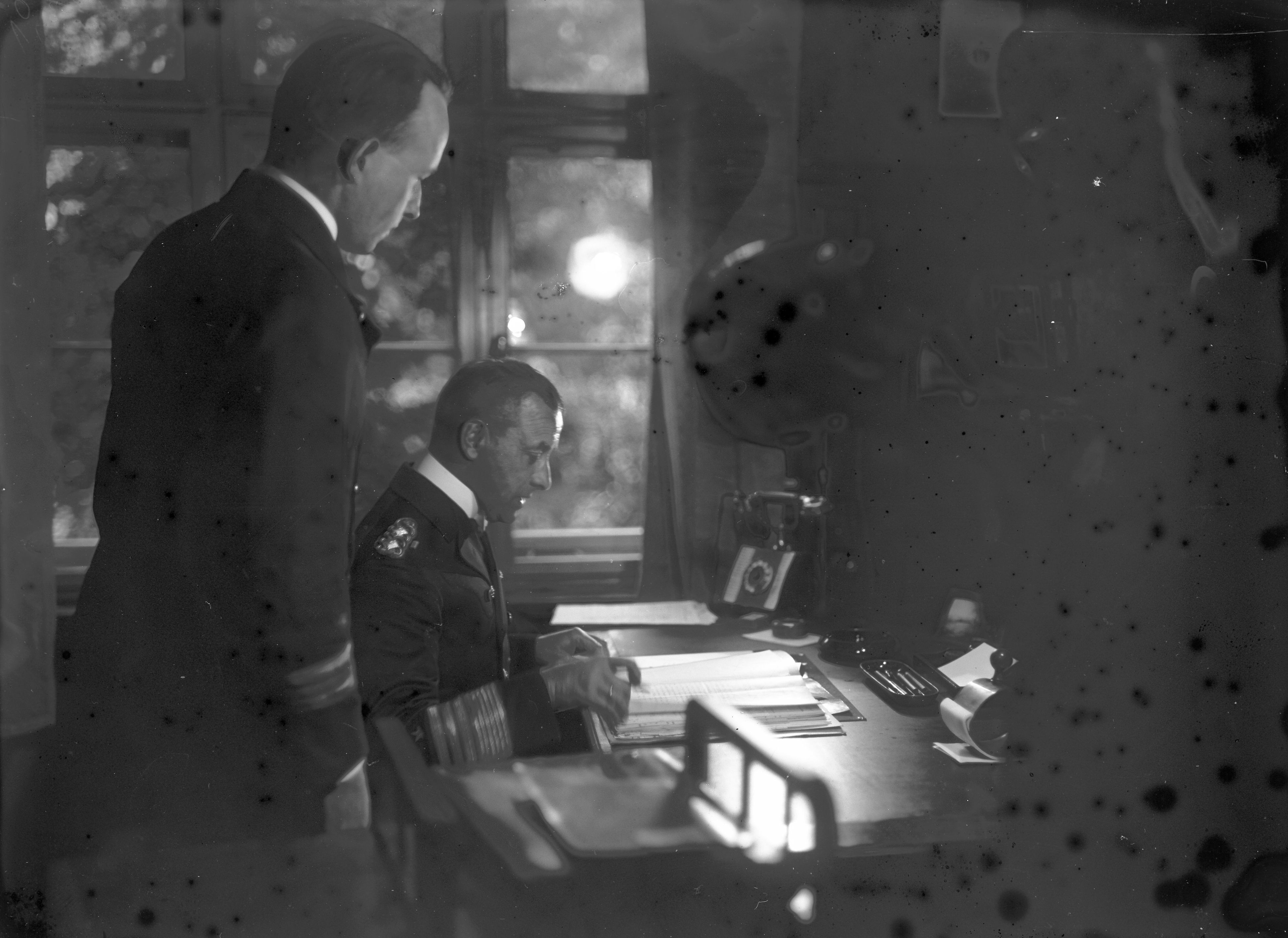
Erich Raeder and His Adjutant


The new Chef der Reichsmarine (Chief of the Navy), Admiral Erich Raeder, signing the protocols in the office of the Reichswehrministerium (Reichswehr Ministry) after taking office. Next to him is his personal adjutant, Kapitänleutnant Norbert von Baumbach. The picture was taken in October 1928 by Georg Pahl.

Source :
https://commons.wikimedia.org/wiki/File:Bundesarchiv_Bild_102-12391,_Erich_Raeder_mit_pers%C3%B6nlichem_Adjudanten.jpg

Wednesday, August 2, 2023

Erich Raeder in the First Day as Chief of the Reichsmarine


Admiral Dr.h.c. Erich Raeder, the new Chef der Marineleitung (Chief of the Naval Command), in the first day in the office, 4 October 1928. He was promoted to the Admiral rank and made chief of the Weimar Republic Navy three days previously, on 1 October 1928.

Source :
https://commons.wikimedia.org/wiki/File:Bundesarchiv_Bild_146-1987-080-30A,_Erich_Raeder.jpg
https://timenote.info/en/Erich-Raeder

Sunday, July 30, 2023

Erich Raeder in 1928


Portrait of Erich Raeder in 1928. On 24 September 1928, Vizeadmiral Raeder became the temporary Chef der Marineleitung (Chief of the Naval Command) of the Reichsmarine, the Weimar Republic Navy. On 1 October 1928 he was promoted to the rank of Admiral and permanent Chef der Marineleitung. On 1 June 1935, the Reichsmarine was renamed the Kriegsmarine and Raeder became its commander-in-chief with the title of Oberbefehlshaber der Kriegsmarine.
 

Source :
http://alifrafikkhan.blogspot.com/2014/10/foto-erich-raeder.html
https://commons.wikimedia.org/w/index.php?search=erich+raeder&title=Special:MediaSearch&go=Go&type=image
https://en.wikipedia.org/wiki/Erich_Raeder

Friday, July 21, 2023

Bio of General der Infanterie Herbert von Böckmann (1886-1974)

Herbert Wilhelm Erich Adalbert Adolf von Böckmann

Date of Birth: 24.07.1886 - Bremen (German Empire)
Date of Death: 10.03.1974 - Baden-Baden, Baden-Württemberg (West Germany)
Buried: Baden-Baden, Lichtenthal. Feld B-Grab 183/184. Eckbergstraße 46, 76534 Baden-Baden

Campaigns: Annexation of Memel (1939), Invasion of Poland (1939), Battle of France (1940), Operation Barbarossa (1941), and Siege of Leningrad (1941-1943)

Parents: Alfred Hans von Böckmann (1859-1921) and Clara Adolfine von Wersebe (1861-1954)
Sibling: Werner von Böckmann (1890-1916)
Spouse: Ina Marie Ucke (1893 - ??? )
Children: Werner Alfred von Böckmann (1918-1943), Luise von Böckmann (1922-1995), and Hans Bernd von Böckmann (1926-2007). Luise von Böckmann married to Kapitänleutnant Rolf-Birger Wahlen (U-Boot) DKiG (1915-1998)

Promotions:
14.03.1905 Charakter als Fähnrich
18.11.1905 Fähnrich
18.08.1906 Leutnant (mit Patent D4d)
28.11.1914 Oberleutnant (mit Patent I6i)
22.03.1916 Hauptmann (mit Patent Bb, später RDA von 22.03.1916 (2)
01.02.1929 Major im Generalstab (RDA von 01.02.1929 (14)
01.06.1933 Oberstleutnant im Generalstab (RDA 1)
01.06.1935 Oberst im Generalstab (RDA 1)
18.01.1939 Generalmajor (mit Wirkung von 01.01.1939 (RDA von 01.01.1939 (7)
01.08.1940 Generalleutnant (RDA 6)
19.04.1942 General der Infanterie (mit Wirkung von 01.04.1942 (RDA von 01.04.1942 (4)

Career:
14.03.1905 Entered Army Service
14.03.1905 - 11.08.1914 Fähnrich in Badisches Leib-Grenadier-Regiment Nr. 109
01.10.1913 - 31.07.1914 Detached to the Kriegsakademie
02.08.1914 - 11.08.1914 Detached to Fliegerschule Döberitz
11.08.1914 - 21.08.1915 Pilot with the Feldflieger-Abteilung 8
21.08.1915 - 13.10.1915 Kompanieführer in Badisches Leib-Grenadier-Regiment Nr. 109
13.10.1915 - 15.10.1915 Stabsoffizier in Njemen-Armee
15.10.1915 - 31.08.1916 Ordonnanzoffizier in the Staff of Gruppe Mitau, Assigned to the Landwehr-Infanterie-Regiment 34
31.08.1916 - 07.12.1916 Transferred into the General-Staff of the I. Reserve-Korps
07.12.1916 - 19.01.1917 Transferred into the General-Staff of the 216. Infanterie-Division
19.01.1917 - 13.03.1917 Officer of the Army, Assigned to 1. Armee
13.03.1917 - 24.03.1917 Transferred into the Army General Staff
24.03.1917 - 29.04.1917 Transferred into the General-Staff of the 38. Infanterie-Division
29.04.1917 - 27.08.1917 Transferred into the General-Staff of 6. Armee
27.08.1917 - 21.12.1917 Transferred into the 36. Reserve-Division
21.12.1917 - 31.05.1918 Transferred into 8. Armee
31.05.1918 - 01.12.1918 Stabsoffizier in the Politische Abteilung / Feldheeres
01.12.1918 - 01.03.1919 Transferred into the Staff of the Baltic Landwehr
01.03.1919 - 01.07.1919 Kompaniechef in 1.Garde-Regiment / Freikorps Potsdam
01.07.1919 - 01.10.1920 Kompaniechef in Reichswehr-Infanterie-Regiment 5 / Freikorps Hülsen
01.10.1920 - 31.10.1921 Chef 4.Kompanie / Infanterie-Regiment 9
31.10.1921 - 17.11.1922 Stabsoffizier in Gruppenkommando 1
17.11.1922 - 01.03.1923 Transferred into the Reichswehrministerium
01.03.1923 - 05.09.1925 Transferred into the Staff of Infanterieführer 1
05.09.1925 - 01.03.1929 Chef 2.Kompanie / 14.Badischen Infanterie-Regiment
01.03.1929 - 01.10.1932 Advisor in Abteilung T1 in Reichswehrministerium
01.10.1932 - 01.09.1934 Stabsoffizier in 3. Division
01.09.1934 - 15.10.1935 Chef Ausbildung-Abteilung in Reichswehrministerium
15.10.1935 - 03.11.1938 Kommandeur Infanterie-Regiment 2
03.11.1938 - 23.08.1939 Chef des Generalstabes I. Armeekorps
23.08.1939 - 03.10.1939 Chef des Generalstabes 3. Armee
03.10.1939 - 26.10.1939 Chef des Generalstabes Grenz-Abschnittskommando Nord
26.10.1939 - 26.01.1942 Kommandeur 11. Infanterie-Division
26.01.1942 - 10.03.1942 Führerreserve OKH (Oberkommando des Heeres)
10.03.1942 - 20.07.1942 mit der Führung beauftragt L. Armeekorps
20.07.1942 - 31.01.1943 Führerreserve OKH (Oberkommando des Heeres)
31.01.1943 - 31.03.1943 The Chief of the Army Personnel Office proposed to the Führer the retirement of General der Infanterie von Böckmann for the reason that he cannot adopt to the changing requirements of the present times
31.03.1943 Retired / releaved from active duty because of his age

Awards and Decorations:
03.01.1912 Ritterkreuz des Großherzoglich Mecklenburgischer Greifenorden (05.02.1913 approval to adopt)
10.09.1914 1914 Eisernes Kreuz II.Klasse
27.01.1915 1914 Eisernes Kreuz I.Klasse
23.06.1915 Ritterkreuz II.Klasse des Grossherzoglich-Badischen Ordens vom Zähringer Löwen mit Schwertern
00.00.191_ Ritterkreuz des Grossherzoglich Mecklenburgisches Greisenorden
00.00.191_ K.u.K. Österreichische Militärverdienstkreuz III.Klasse mit der Kriegsdekoration
00.00.19__ Baltenkreuz I.Klasse
05.12.1934 Ehrenkreuz für Frontkämpfer 1914-1918
06.10.1936 Dienstauszeichnung der Wehrmacht I.Klasse (25 Jahre)
00.00.1939 Medaille zur Erinnerung an die Heimkehr des Memellandes
15.09.1939 1939 spange zum 1914 Eisernes Kreuz II.Klasse
04.10.1939 1939 spange zum 1914 Eisernes Kreuz I.Klasse
04.12.1941 Ritterkreuz des Eisernen Kreuzes, as Generalleutnant and Kommandeur 11. Infanterie-Division. The following wartime excerpt describes why Böckmann was awarded the Ritterkreuz: “On the 28.10.1941 the 11. and 21. Infanterie-Divisionen were collectively designated as a single unit (attack group Volkhov) under the command of Generalleutnant von Böckmann. Their mission was to capture Wolchowstroj through a ruthless push to the north. In this context Generalleutnant von Böckmann made the decision to concentrate all available forces on the right wing. Here they would advance along the Volkhov river with fire support from the 21. Infanterie-Division and break through the enemy positions on a narrow frontage. Through this swift decision and its energetic prosecution it was possible to carry the attack as far as Andrejewo. In the process 5 layers of enemy defenses were broken through, and 533 strongly constructed combat bunkers were captured.”
00.00.1942 Gran Cruz de la Orden de Isabel la Católica (Spain)
00.00.1942 Medaille "Winterschlacht im Osten 1941/42" (Ostmedaille)

---------------------------------------------------------------------------------

Herbert von Böckmann was born on July 24, 1886 in Bremen and left the cadet corps on March 14, 1905 as char. Ensign of the 1st Baden Life Grenadier Regiment No. 109 and was commanded to the War Academy on October 1st, 1913.

At the beginning of World War I, he took up command at the Döberitz Flying School on August 2, 1914 and was transferred to Field Aviation Department 8 as a pilot on August 11, 1914, with which he was initially deployed on the western front.

After changing as company commander in Grenadier Regiment 109 on August 21, 1915, von Böckmann changed to the staff of the AOK of the Njemen Army on the Eastern Front on October 13, 1915, where he was an orderly officer on the staff of the group from October 15, 1915 Mitau, assigned to the Landwehr Infantry Regiment 34, is on duty.

From June 31, 1916 he was on the General Staff of the 1st Reserve Corps, on December 7, 1916 he was transferred to the General Staff of the 216th Infantry Division and on January 19, 1917 he was assigned to AOK 1 as an army officer. There from March 13, 1917 on the Army General Staff, von Böckmann switched to the General Staff of the 38th Infantry Division on March 24, 1917, to be transferred to the General Staff of the 6th Army on April 29, 1917. From August 27, 1917 he was on the General Staff of the 36th Reserve Division, on December 21, 1917 he was first on the General Staff of the 8th Army and on May 31, 1918 on the General Staff of the Field Army, in the Political Department there.

After the armistice, he switched to the general staff of the Baltic Landwehr on December 1, 1918 and took over the position of company commander in the 1st Foot Guards Regiment in the Freikorps Potsdam on March 1, 1919. From July 1st, 1919 he was chief of a company in the 5th Reichswehr Infantry Regiment with the Freikorps Hulsen, from October 1st, 1920 he was chief of the 4th company of the 9th Infantry Regiment.

From October 31, 1921 he was on the General Staff of Group Command 1, from November 17, 1922 he belonged to the Reichswehr Ministry, from where he moved to the Staff of Infantry Leader 1 on March 1, 1923.

On September 5th, 1925 he became chief of the 2nd company of the 14th Baden Infantry Regiment and returned to Department T1 of the Reichswehr Ministry on March 1st, 1929. From there he was transferred to the General Staff of the 3rd Division on October 1, 1932 and transferred back to the Reichswehr Ministry on September 1, 1934, where he was appointed head of the training department on October 1, 1934.

From October 15th, 1935 he was commander of the 2nd Infantry Regiment, from November 3rd, 1938 he took over the post of chief of staff of the 1st Army Corps, and in the course of the mobilization from August 26th, 1939 that of the 3rd Army on October 21, 1939, after the Polish campaign, was initially dissolved. As a result, von Böckmann was appointed commander of the 11th Infantry Division on October 24, 1939 with effect from October 26, 1939. With his division he takes part in the French and eastern campaigns. There, on October 28, 1941, von Böckmann took command of the Volkhov Assault Group, consisting of the 11th and 21st Infantry Divisions. He then received the order by ruthless advance to reach Volkhovstroy. Von Böckmann made the personal decision to throw all available forces onto the right wing, following the Volkhov, and supported by the artillery of the 21st Infantry Division to break through the enemy positions on a narrow strip. This rapid advance enabled the attack to reach Andreyevo, breaking through five enemy positions in a row and destroying more than 533 heavily built combat bunkers. For this von Böckmann received the Knight's Cross as Lieutenant General and Commander of the 11th Infantry Division on December 4th, 1941.

A short time later, with effect from January 22, 1942, he was transferred to the reserve leader. On March 10, 1942 he was put in charge of the L. Army Corps, but was already transferred back to the reserve on July 20, 1942.

The head of the Army Personnel Office, Schmundt, then felt compelled to propose to the Fuhrer that General von Böckmann should be dismissed, since he "cannot come to terms with the requirements of today". Thus, on March 31, 1943, he was released from active military service with the right to wear a uniform.

Herbert von Böckmann died on March 10, 1979 in Baden-Baden.


Herbert von Böckmann as a child.


Herbert von Böckmann and Ina Marie Ucke.


Hauptmann Herbert von Böckmann with son Werner and daughter Luise.


Herbert von Böckmann (front) with his soldiers, possibly during a war manoeuvre.


Herbert von Böckmann in a ceremony.


Generalmajor Herbert von Böckmann.


Generalmajor Herbert von Böckmann (centre) with Nazi officials.


Herbert von Böckmann with civilian.


Generalleutnant Herbert von Böckmann.


Generalleutnant Herbert von Böckmann as Divisionskommandeur of 11. Infanterie-Division.


Herbert von Böckmann (right) and Ernst Busch (2nd from right).


General der Infanterie Herbert von Böckmann with his officers.


Wehrpass of Herbert von Böckmann.


Werner Alfred von Böckmann (23 December 1918 - 10 April 1943), son of General der Infanterie Herbert von Böckmann.


Source :
Ian Jewison photo collection
https://www.facebook.com/groups/925252454510750/posts/1974173886285263
https://forum.axishistory.com/search.php?keywords=Herbert+von+B%C3%B6ckmann&terms=all&author=&sc=1&sf=all&sr=topics&sk=t&sd=d&st=0&ch=300&t=0&submit=Search
https://www.geni.com/people/Herbert-Adolf-von-B%C3%B6ckmann/6000000005741270250
http://www.geocities.ws/orion47.geo/WEHRMACHT/HEER/General/BOECKMANN_HERBERT.html
https://www.google.com/url?sa=t&rct=j&q=&esrc=s&source=web&cd=&cad=rja&uact=8&ved=2ahUKEwiq0eDdhZuAAxV-bWwGHc66AcI4FBAWegQIKxAB&url=http%3A%2F%2Fwww.ritterkreuztraeger.info%2Frk%2Fb%2FB389B%25F6ckmann-Herbert.pdf&usg=AOvVaw1nm5wqPTZPGEdZrpXcmdEX&opi=89978449
https://military-history.fandom.com/wiki/Herbert_von_B%C3%B6ckmann
https://www.ratisbons.com/shop/new-arrivals/new-update-may-2020/general-v-boeckmann-photo-album-knight-s-cross-winner.html
https://www.tracesofwar.com/persons/28522/B%C3%B6ckmann-von-Herbert.htm
https://web.archive.org/web/20110105164308fw_/http://ritterkreuztraeger-1939-45.de/Infanterie/B/Bo/Boeckmann-Herbert-von.htm
https://ww2gravestone.com/people/bockmann-herbert-ernst-adolf-wilhelm-von/