17 July 1944, Moscow residents were shocked by the appearance of a column of Nazis in the city. “Operation Big Waltz” - this code, apparently, the unofficial name of this indicative action in the NKVD.
Its participants are generals, officers and soldiers of the German Heeresgruppe Mitte, utterly defeated in the summer of 1944, in the Belarusian strategic offensive operation Bagration. The losses of the enemy turned out to be much higher than in the “Stalingrad catastrophe”. However, the allied press expressed great doubt in such an impressive defeat of the Nazis. The information war has already gained momentum...
It was then that in the leadership of the USSR the idea was ripe to demonstrate to the world the successes of the Red Army and to carry a huge mass of German prisoners led by their beaten generals through the streets of Moscow.
“Show them to the whole world.”
In the epic “Liberation: the direction of the main attack” there is a short but apparently historical episode: Stalin, after hearing the report of the Deputy Chief of the General Staff of the Army General Alexei Antonov (“MIC”, No. 17, 2017) about the defeat of the German troops in Belarus, in its characteristic manner, says quietly: “You take prisoners, and neither enemies nor allies believe you. Do not hide your prisoners, show them, let everyone see. "
Why was the operation called the Great Waltz? Maybe because the main element of this ballroom dance is spinning in a circle? After all, the movement of the column of prisoners of the Nazis was also planned in a large circle - along the Garden Ring ...
Whatever the case, the chief “choreographer” of an unprecedented dance was the People's Commissariat of Internal Affairs of the USSR, specifically, Deputy Commissar Colonel-General A. N. Apollonov. Directly for the "waltzing" of the Germans on the streets of the capital was the responsibility of the commander of the Moscow Military District, Colonel-General P. Artemyev, the former head of the NKVD operational troops. The order on that day was ensured by the head of the Moscow Directorate of the Republic of Kazakhstan, the commissioner of the police of 2 rank V. N. Romanchenko. By his order, the capital's law enforcement officers were transferred to an enhanced duty regime. Patrol outfits from the 2 Motorized Rifle Division of the special mission of the NKVD troops under the command of Major-General V.V. Lukashev were sent to help the law enforcement officers.
Under the strict secret
At the beginning of July, in the Belarusian camps for German prisoners of war, under the strict secret, the selection of relatively healthy and able to move on foot order of the Nazi soldiers and officers began in the Belarusian camps. Under the guard of the guards from the convoy troops of the NKVD, they were concentrated at the railway stations of Bobruisk and Vitebsk. Here they began to hastily train the trains with wagon-cars, into which they loaded the bewildered prisoners and under the escort of 1944 motorized rifle and 7 convoy divisions of the NKVD troops sent to Moscow. In total, according to some estimates, it took more than a thousand cars (about 36 echelons) and not one hundred escort soldiers.
Parade of the vanquished
In the first half of July, 57 600 people, including 19 Nazi generals, were delivered to Moscow. The prisoners were concentrated on the Moscow hippodrome field and at the Dynamo stadium. These territories were cordoned off by guards from the 36 Division of the NKVD escort troops under the command of Colonel I. I. Shevlyakov. But several thousand "special contingent", according to the memoirs of a participant in the operation, lieutenant colonel of the police in retirement V. D. Vasilenko, for some reason, placed on the exit field of their cavalry regiment of the division named after F. Dzerzhinsky. Years later, the veteran, meeting with young Dzerzhinsky warriors, said: “On the field there were loudspeakers, transmitting news from the fronts. When the announcer spoke about the next city repulsed from the enemy, the Fritz shouted: “Hurray!”. They rejoiced that, being in captivity, they saved their lives ”...
"So you got to Moscow"
Early in the morning of July 17, all prisoners were divided into two unequal groups and people were built into the 20 convoy along the front: the first — about 42 thousands — must proceed along Gorky Street, then clockwise along the Garden Ring to the Kursk railway station. The second route - 15 of thousands of people - also ran along Gorky Street, and further along Sadovoi, but counterclockwise, to the station Kanatchikovo District Railway.
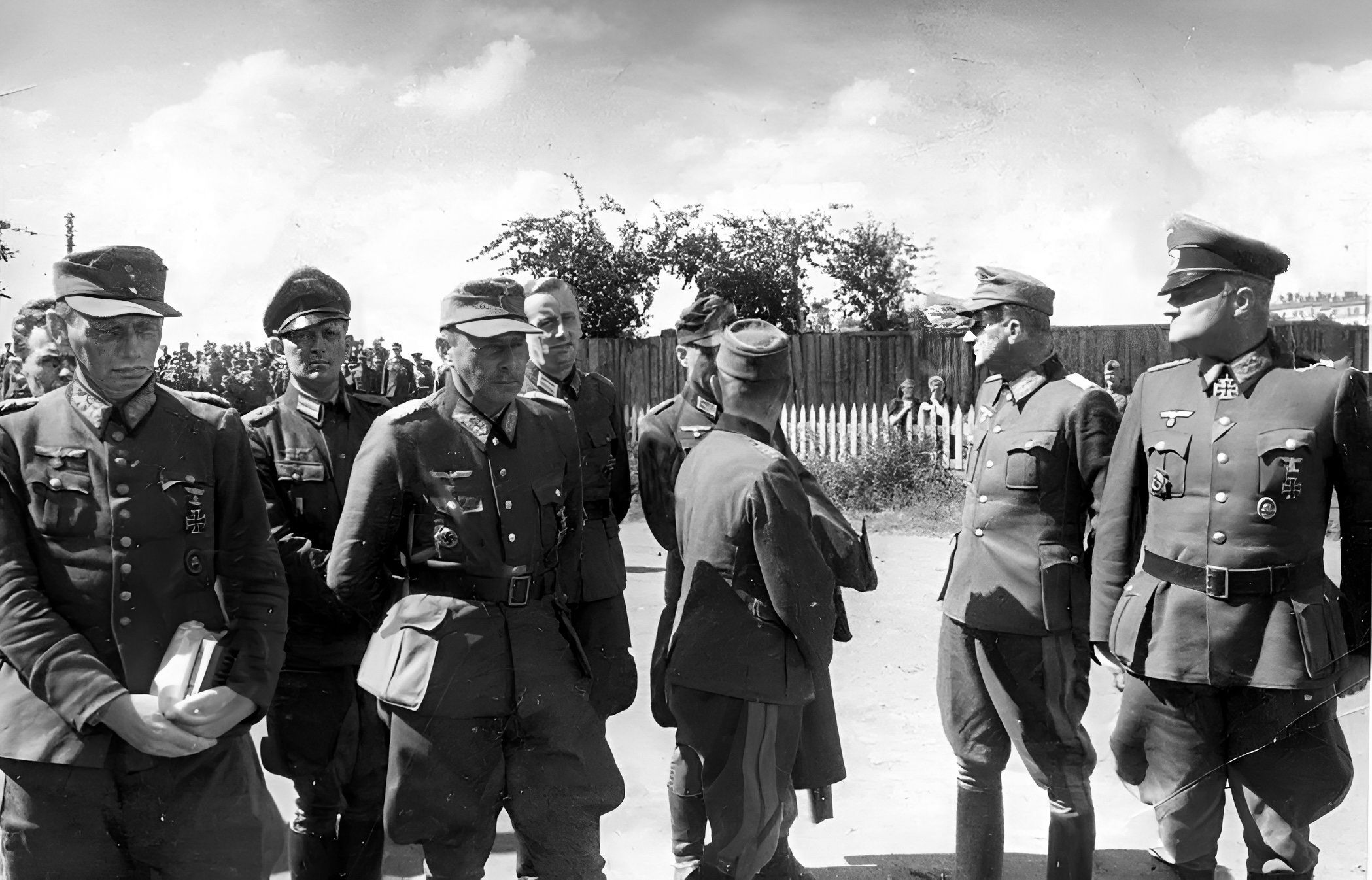
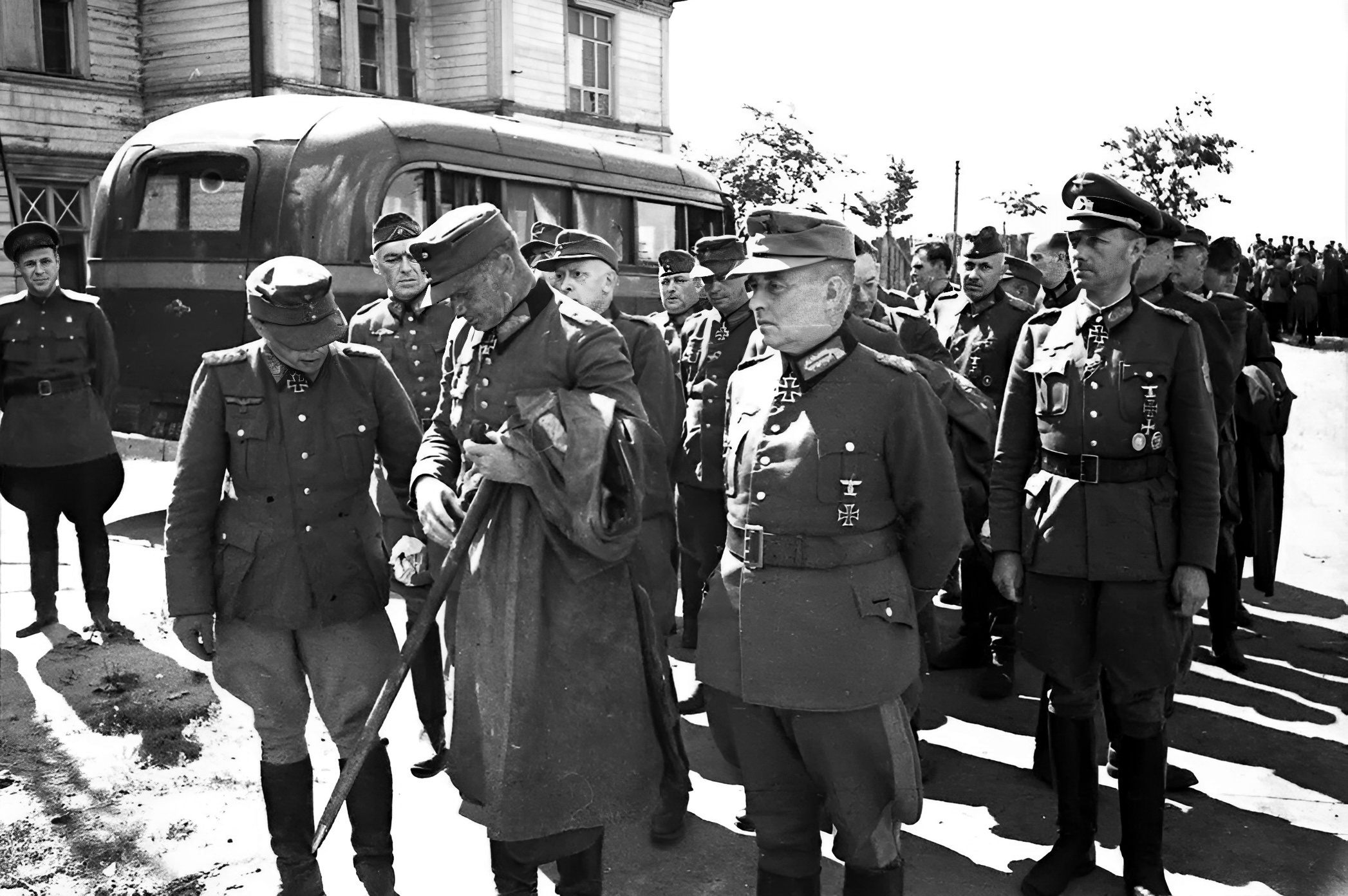
At the head of the first column were 19 broken German military leaders in uniforms and with orders left to them under the terms of surrender. Among them, Hitler's "favorite" is the commander of the 78 Sturm-Division, Generalleutnant Hans Traut (in the newsreel he is with an image cane in his hand). In the German army, he was told about him as a “master of defense,” for which he was dubbed the “iron general.” He himself boastfully declared: “While I am under Orsha, Germany can be calm!” I didn't live up to my promises ...
Next to him were two infantry generals - the commanders of the 27th and 53rd army corps Paul Völckers and Friedrich Gollwittser, and also the acting commander of the 4th army, Generalleutnant Vincenz Muller. Following the "bloody commandants" of the cities: Mogilev - Generalmajor Gottfried von Erdmansdorf and successively Orel, Bryansk, Bobruisk - Generalmajor Adolf Hamann. Once groomed and self-confident generals were quietly talking, they didn’t look around. Some people sometimes cast indifferent glances at Muscovites, pretending that they were not mentally broken by captivity. Colonels stomped on the generals, then a huge number of officers descending in ranks. Then came the gray mass of soldiers in frayed uniforms. For many, cans used to eat food instead of pots were rattled over their shoulders on ropes. The soldiers, unlike the top ranks of the Wehrmacht, looked at the Muscovites with curiosity, looked in surprise at the beautiful buildings towering along the streets: after all, they repeated so much that after the raids “valiant” aviation Goering "the Bolshevik capital lies in ruins."
On both sides, the convoy was accompanied by riders of the Cavalry Regiment of the F. Dzerzhinsky division with naked swords, soldiers of the 236 regiment of the NKVD convoy troops and outfits from other parts of the internal troops with rifles at the ready with bayonets. The entire convoy service was led by an experienced colonel Shevlyakov in such matters, who was ordered not to allow acts of violence to the captives by the population.
The once brave legionnaires, having marched past Europe almost solemnly, now represented a pitiful sight. “So you got to Moscow!” - rushed from the crowd of citizens who filled the sidewalks to see with their own eyes the Nazi warriors who dreamed of entering the Soviet capital as winners.
Fair retribution
The “parade of the vanquished” was completed by seven o'clock in the evening. After that, all the prisoners were again placed in wagons and guarded by the guards from the NKVD convoy troops were taken to camps, where for several years they were engaged in the restoration of the national economy of the country, which they intended to wipe off the face of the earth. The generals under special guard were sent to the cells of the Butyrskaya and Lefortovo prisons. There they were waited for interrogations in Lubyanka, the investigation and the court ...
It was noted that the entire event passed without incident, only four German soldiers had to provide medical assistance. USSR People's Commissar of Internal Affairs Lavrenti Beria in a written report to the State Defense Committee reported that during the passage of columns of prisoners of war the population behaved in an organized manner, there were no accidents in the city, however during the march from the population there were a large number of shouts: “Death to Hitler!” And "Death to fascism!"
What happened to the above mentioned beaten German commanders? Hamann and Erdmannsdorf for their bloody crimes suffered a well-deserved punishment - the military tribunal sentenced them to death. Traut was given 25 years of imprisonment. But in October, the 1952 th war criminal was suddenly released and sent to the Fatherland, where he lived safely in the family's neighborhood and died only in December of the 1974 th at home - in Darmstadt.
Gollwitz got his quarter. However, he served only about 10 years. All in all, by the year 1955 they released about a dozen Hitler generals captured in Belarus and handed them over to the authorities of the Federal Republic of Germany. And the infantry general Paul Völckers died in 1946 in a high-ranking prisoner camp near Vladimir, which cannot be called a camp — the former rest home under guard from the NKVD troops.
The fate of Vincenz Müller, who from the moment of his captivity began to actively participate in anti-fascist activities, turned out to be quite strange. Already in 1947, he returned to Germany, later the GDR, was the first chief of the General Staff of the National People’s Army. But by the end of 50's, there was evidence of his involvement in the massacres of Jews and executions of Soviet prisoners of war, as a result of which Müller ended up in a hospital diagnosed with schizophrenia. In May, 1961 th he jumped out of the balcony of his own house in a suburb of Berlin, crashed to death...
To whom the resignation, and to whom the nuclear project
The fate of the Soviet generals who conducted the Great Waltz also took shape in different ways. Colonel-General Apollo, who took the post of Deputy Minister of State Security (USSR Ministry of State Security) for the management of troops, at the end of 1953 in his only 46 was retired. He died in 1978 year, was buried in Moscow at Kuntsevo Cemetery.
After the death of Stalin, the commander of the Moscow Military District troops, Colonel-General Artemyev, was demoted and sent away from the capital by the deputy commander of the Urals Military District. Since 1960-th was retired. He died in 1979 year, rested at the Novodevichy cemetery.
The main escort of the “parade of the vanquished” Shevlyakov at the end of 1944 was awarded the rank of major general. After the war, he was involved in the implementation of the "atomic project", because of which his biography was covered with a dense veil of secrecy. It is only known that in 1948 – 1960, the general headed the Main Directorate of military construction units, who built secret objects on which the “nuclear missile shield” of the Motherland was forged.
In the foyer of the Central Management Club of the Russian National Guard troops (during the war years, the headquarters of the 36 Division of the NKVD convoy troops were located here) a painting canvas entitled “German convoy in Moscow” was displayed. He painted the picture in 1947 from memory and from photographs by famous artist Irakly Toidze (the author of the poster “Motherland Calls!”) And presented to the commander of the convoy unit Major General Shevlyakov, with whom he was on friendly terms. Now, this work reminds young soldiers and officers of the Rosguard about the participation of law enforcement troops in a unique event of the Great Patriotic ...
At least 19 Wehrmacht generals and 6 Oberst/Oberstleutnant were paraded along the main road of Moscow, especially Sadovoye Koltso (Garden Ring). They were as follow:
1. Generalleutnant Rudolf Bamler (12. Infanterie-Division)
2. Generalleutnant Hermann Böhme (73. Infanterie-Division)
3. Generalmajor Joachim Engel (45. Infanterie-Division)
4. Generalmajor Gottfried von Erdmannsdorff (Kommandant Festung Mogilev)
5. Generalmajor Gustav Gihr (707. Infanterie-Division)
6. General der Infanterie Friedrich Gollwitzer (LIII. Armeekorps)
7. Generalleutnant Adolf Hamann (Kommandant Festung Bobruisk)
8. Generalleutnant Walter Heyne (6. Infanterie-Division)
9. Generalleutnant Alfons Hitter (206. Infanterie-Division)
10. Generalleutnant Edmund Hoffmeister (XXXXI. Panzerkorps)
11. Generalmajor Günther Klammt (260. Infanterie-Division)
12. Generalleutnant Kurt-Jürgen Freiherr von Lützow (XXXV. Armeekorps)
13. Generalmajor Herbert Michaelis (95. Infanterie-Division)
14. Generalleutnant Vincenz Müller (XII. Armeekorps)
15. Generalmajor Aurel Schmidt (Höherer Pionierführer 10/9. Armee)
16. Generalmajor Friedrich-Carl von Steinkeller (Panzergrenadier-Division "Feldherrnhalle”)
17. Generalleutnant Hans Traut (78. Sturm-Division)
18. Generalmajor Adolf Trowitz (57. Infanterie-Division)
19. General der Infanterie Paul Völckers (XXVII. Armeekorps)

Parade of high ranking Wehrmacht officers captured by the Red Army
during Operation Bagration (also known as "Parade of the Vanquished" or
"Operation Big Waltz"), which was held on the streets of Moscow on
Monday, 17 July 1944. Approximately 57,000 German soldiers and officers
from Heeresgruppe Mitte (most of whom were captured by Soviet troops
from the 1st, 2nd and 3rd Belorussian Fronts) were ordered to march
through the Sadovoye Koltso (Garden Ring) and other main streets of the
Soviet capital. This photo shows the parade starting point at Begovaya railway station. From left to right: 1.Generalmajor Joachim Engel (Kommandeur 45. Infanterie-Division), 2.unknown, 3.Generalmajor Günther Klammt (Kommandeur 260. Infanterie-Division), 4.unknown, 5.unknown, 6.Generalmajor Herbert Michaelis (Kommandeur 95. Infanterie-Division), 7.Generalmajor Aurel Schmidt (Höherer Pionierführer 10 / 9.Armee), and 8.Generalmajor Gottfried von Erdmannsdorff (Kommandant Festung Mogilev).


Parade of high ranking Wehrmacht officers captured by the Red Army
during Operation Bagration (also known as "Parade of the Vanquished" or
"Operation Big Waltz"), which was held on the streets of Moscow on
Monday, 17 July 1944. Approximately 57,000 German soldiers and officers
from Heeresgruppe Mitte (most of whom were captured by Soviet troops
from the 1st, 2nd and 3rd Belorussian Fronts) were ordered to march
through the Sadovoye Koltso (Garden Ring) and other main streets of the
Soviet capital. This photo shows the parade starting point at
Begovaya railway station. From left to right: 1.Generalmajor Günther Klammt (Kommandeur 260. Infanterie-Division), 2.Generalmajor Herbert Michaelis (Kommandeur 95.
Infanterie-Division), 3.Generalmajor Aurel Schmidt (Höherer
Pionierführer 10 / 9.Armee), and 4.Generalmajor Gottfried von
Erdmannsdorff (Kommandant Festung Mogilev). The DKiGträger (Deutsches Kreuz in Gold holder) between Klammt and Michaelis is possibly Oberst im Generalstab Hans Schmidt (Chef des
Generalstabes LIII. Armeekorps).


Parade of high ranking Wehrmacht officers captured by the Red Army
during Operation Bagration (also known as "Parade of the Vanquished" or
"Operation Big Waltz"), which was held on the streets of Moscow on
Monday, 17 July 1944. Approximately 57,000 German soldiers and officers
from Heeresgruppe Mitte (most of whom were captured by Soviet troops
from the 1st, 2nd and 3rd Belorussian Fronts) were ordered to march
through the Sadovoye Koltso (Garden Ring) and other main streets of the
Soviet capital. This photo shows the parade starting point at Begovaya
railway station. From left to right: 1.Generalmajor Joachim Engel
(Kommandeur 45. Infanterie-Division), 2.Generalmajor Günther Klammt (Kommandeur 260. Infanterie-Division), 4..Generalmajor Herbert Michaelis (Kommandeur 95.
Infanterie-Division), and 4.Generalmajor Aurel Schmidt (Höherer
Pionierführer 10 / 9.Armee).

Parade of high ranking Wehrmacht officers captured by the Red Army
during Operation Bagration (also known as "Parade of the Vanquished" or
"Operation Big Waltz"), which was held on the streets of Moscow on
Monday, 17 July 1944. Approximately 57,000 German soldiers and officers
from Heeresgruppe Mitte (most of whom were captured by Soviet troops
from the 1st, 2nd and 3rd Belorussian Fronts) were ordered to march
through the Sadovoye Koltso (Garden Ring) and other main streets of the
Soviet capital. This photo shows the parade starting point at
Begovaya railway station. From left to right: 1.Generalleutnant Vincenz Müller (Kommandierender General XII. Armeekorps), 2.Generalleutnant Rudolf Bamler (Kommandeur 12. Infanterie-Division), 3.General der Infanterie Paul Völckers (Kommandierender General XXVII. Armeekorps), 4.Generalleutnant Walter Heyne (Kommandeur 6. Infanterie-Division), 5.Generalleutnant Adolf Hamann (Kommandant Festung Bobruisk), 6.Generalmajor Friedrich-Carl von Steinkeller (Kommandeur Panzergrenadier-Division "Feldherrnhalle”), 7.General der Infanterie Friedrich Gollwitzer (Kommandierender General LIII. Armeekorps), 7a.Generalleutnant Hermann Böhme (Kommandeur 73. Infanterie-Division), 8.Generalmajor Gustav Gihr (Kommandeur 707. Infanterie-Division), 9.Generalleutnant Kurt-Jürgen Freiherr von Lützow (Kommandierender General XXXV. Armeekorps), and 10.Generalmajor Gottfried von Erdmannsdorff (Kommandant Festung Mogilev).


Parade of high ranking Wehrmacht officers captured by the Red Army
during Operation Bagration (also known as "Parade of the Vanquished" or
"Operation Big Waltz"), which was held on the streets of Moscow on
Monday, 17 July 1944. Approximately 57,000 German soldiers and officers
from Heeresgruppe Mitte (most of whom were captured by Soviet troops
from the 1st, 2nd and 3rd Belorussian Fronts) were ordered to march
through the Sadovoye Koltso (Garden Ring) and other main streets of the
Soviet capital. This photo shows the parade starting point at
Begovaya railway station. From left to right: 1.Generalleutnant Adolf Hamann (Kommandant Festung Bobruisk), 2.Generalleutnant Hans Traut (Kommandeur 78. Sturm-Division), 3.Generalmajor Joachim Engel (Kommandeur 45. Infanterie-Division), 4.Generalmajor Adolf Trowitz (Kommandeur 57. Infanterie-Division), 5.Generalmajor Günther Klammt (Kommandeur 260. Infanterie-Division), 6.Generalmajor Gustav Gihr
(Kommandeur 707. Infanterie-Division), 7.Generalmajor Herbert Michaelis (Kommandeur 95. Infanterie-Division), 8.Generalmajor Gottfried von Erdmannsdorff (Kommandant Festung
Mogilev), and 9.Generalmajor Aurel Schmidt (Höherer Pionierführer 10 / 9.Armee).


Parade of high ranking Wehrmacht officers captured by the Red Army
during Operation Bagration (also known as "Parade of the Vanquished" or
"Operation Big Waltz"), which was held on the streets of Moscow on
Monday, 17 July 1944. Approximately 57,000 German soldiers and officers
from Heeresgruppe Mitte (most of whom were captured by Soviet troops
from the 1st, 2nd and 3rd Belorussian Fronts) were ordered to march
through the Sadovoye Koltso (Garden Ring) and other main streets of the
Soviet capital. This photo shows the parade starting point at
Begovaya railway station. From left to right: 1.3.Generalmajor Joachim Engel (Kommandeur 45. Infanterie-Division), 2.Generalmajor Günther Klammt (Kommandeur 260. Infanterie-Division), 3.Generalmajor Gustav Gihr
(Kommandeur 707. Infanterie-Division), 4.Generalmajor Herbert Michaelis
(Kommandeur 95. Infanterie-Division), 5.Generalmajor Gottfried von
Erdmannsdorff (Kommandant Festung
Mogilev), and 6.Generalmajor Aurel Schmidt (Höherer Pionierführer 10 /
9.Armee).

From left to right: Generalleutnant Rudolf Bamler (Kommandeur 12. Infanterie-Division) and Generalmajor Gottfried von Erdmannsdorff (Kommandant Festung Mogilev). This picture was taken during the parade of high ranking Wehrmacht officers captured by the Red Army
during Operation Bagration (also known as "Parade of the Vanquished" or
"Operation Big Waltz"), which was held on the streets of Moscow on
Monday, 17 July 1944. Approximately 57,000 German soldiers and officers
from Heeresgruppe Mitte (most of whom were captured by Soviet troops
from the 1st, 2nd and 3rd Belorussian Fronts) were ordered to march
through the Sadovoye Koltso (Garden Ring) and other main streets of the
Soviet capital.

Parade of high ranking Wehrmacht officers captured by the Red Army
during Operation Bagration (also known as "Parade of the Vanquished" or
"Operation Big Waltz"), which was held on the streets of Moscow on
Monday, 17 July 1944. Approximately 57,000 German soldiers and officers
from Heeresgruppe Mitte (most of whom were captured by Soviet troops
from the 1st, 2nd and 3rd Belorussian Fronts) were ordered to march
through the Sadovoye Koltso (Garden Ring) and other main streets of the
Soviet capital. This photo shows the parade starting point at
Begovaya railway station.
First row, from left to right: Generalleutnant Vincenz Müller (Kommandierender General XII. Armeekorps), General der Infanterie Paul Völckers (Kommandierender General XXVII. Armeekorps), and General der Infanterie Friedrich Gollwitzer (Kommandierender General LIII. Armeekorps).
Second row, from left to right: Generalleutnant Rudolf Bamler (Kommandeur 12. Infanterie-Division), Generalleutnant Walter Heyne (Kommandeur 6. Infanterie-Division), Generalleutnant Alfons Hitter (Kommandeur 206. Infanterie-Division), and Generalleutnant Kurt-Jürgen Freiherr von Lützow (Kommandierender General XXXV. Armeekorps)
Third row, from left to right: Generalmajor Friedrich-Carl von Steinkeller (Kommandeur Panzergrenadier-Division "Feldherrnhalle”), Generalleutnant Edmund Hoffmeister (Kommandierender General XXXXI. Panzerkorps), Generalleutnant Hermann Böhme (Kommandeur 73. Infanterie-Division), and Generalleutnant Hans Traut (Kommandeur 78. Sturm-Division)
Fourth row, from left to right: Generalleutnant Adolf Hamann (Kommandant Festung Bobruisk), Generalmajor Adolf Trowitz (Kommandeur 57. Infanterie-Division), Generalmajor Gustav Gihr (Kommandeur 707. Infanterie-Division), and Generalmajor Gottfried von Erdmannsdorff (Kommandant Festung Mogilev)
Fifth row, from left to right: Generalmajor Joachim Engel (Kommandeur 45. Infanterie-Division), Generalmajor Günther Klammt (Kommandeur 260. Infanterie-Division), Generalmajor Herbert Michaelis (Kommandeur 95. Infanterie-Division), and Generalmajor Aurel Schmidt (Höherer Pionierführer 10 / 9.Armee)
Sixth row consist of four Oberst / Oberstleutnant: Oberst Theodor "Theo" Preu (Führer 197.
Infanterie-Division) and Oberst im Generalstab Hans Schmidt (Chef des
Generalstabes LIII. Armeekorps), Lippmann and Eckert.


Parade of high ranking Wehrmacht officers captured by the Red Army during Operation Bagration (also known as "Parade of the Vanquished" or "Operation Big Waltz"), which was held on the streets of Moscow on Monday, 17 July 1944. Approximately 57,000 German soldiers and officers from Heeresgruppe Mitte (most of whom were captured by Soviet troops from the 1st, 2nd and 3rd Belorussian Fronts) were ordered to march through the Sadovoye Koltso (Garden Ring) and other main streets of the Soviet capital. This photo shows the parade starting point at
Begovaya railway station. From left to right: 1.Generalmajor Joachim Engel (Kommandeur 45. Infanterie-Division), 2.Generalleutnant Adolf Hamann (Kommandant Festung Bobruisk), 3.Generalleutnant Hans Traut (Kommandeur 78. Sturm-Division), 4.Generalleutnant Rudolf Bamler (Kommandeur 12. Infanterie-Division), 5.Generalmajor Gustav Gihr (Kommandeur 707. Infanterie-Division), 6.Generalleutnant Walter Heyne (Kommandeur 6. Infanterie-Division), 6a.Generalleutnant Hermann Böhme (Kommandeur 73. Infanterie-Division), 7.Generalmajor Gottfried von
Erdmannsdorff (Kommandant Festung Mogilev), 8.Generalleutnant Vincenz
Müller (Kommandierender General XII. Armeekorps), 9.Generalleutnant Kurt-Jürgen Freiherr von Lützow (Kommandierender
General XXXV. Armeekorps), 10.General der
Infanterie Paul Völckers (Kommandierender General XXVII. Armeekorps), and 11.General der Infanterie
Friedrich Gollwitzer (Kommandierender General LIII. Armeekorps).

Parade of high ranking Wehrmacht officers captured by the Red Army
during Operation Bagration (also known as "Parade of the Vanquished" or
"Operation Big Waltz"), which was held on the streets of Moscow on
Monday, 17 July 1944. Approximately 57,000 German soldiers and officers
from Heeresgruppe Mitte (most of whom were captured by Soviet troops
from the 1st, 2nd and 3rd Belorussian Fronts) were ordered to march
through the Sadovoye Koltso (Garden Ring) and other main streets of the
Soviet capital. This photo shows the parade starting point at
Begovaya railway station. From left to right: 1.Generalleutnant Adolf
Hamann (Kommandant Festung Bobruisk), 2.Generalleutnant Hans Traut (Kommandeur 78. Sturm-Division), 3.Generalleutnant Rudolf Bamler (Kommandeur 12. Infanterie-Division), 4.Generalleutnant Edmund Hoffmeister (Kommandierender General XXXXI. Panzerkorps), 5.Generalmajor Gustav Gihr (Kommandeur 707. Infanterie-Division), 6.Generalleutnant Walter Heyne (Kommandeur 6. Infanterie-Division), 7.Generalleutnant Hermann Böhme (Kommandeur 73. Infanterie-Division), 8.Generalmajor Gottfried von
Erdmannsdorff (Kommandant Festung Mogilev), 9.Generalleutnant Alfons Hitter (Kommandeur 206. Infanterie-Division), 10.Generalleutnant Vincenz
Müller (Kommandierender General XII. Armeekorps), 11.Generalleutnant
Kurt-Jürgen Freiherr von Lützow (Kommandierender
General XXXV. Armeekorps), 12.General der
Infanterie Paul Völckers (Kommandierender General XXVII. Armeekorps), and 13.General der Infanterie
Friedrich Gollwitzer (Kommandierender General LIII. Armeekorps).


Parade of high ranking Wehrmacht officers captured by the Red Army
during Operation Bagration (also known as "Parade of the Vanquished" or
"Operation Big Waltz"), which was held on the streets of Moscow on
Monday, 17 July 1944. Approximately 57,000 German soldiers and officers
from Heeresgruppe Mitte (most of whom were captured by Soviet troops
from the 1st, 2nd and 3rd Belorussian Fronts) were ordered to march
through the Sadovoye Koltso (Garden Ring) and other main streets of the
Soviet capital. This photo shows the parade passing
Begovaya Alley. The Nazis are led from the Hippodrome to Leningradsky Prospekt to the “promenade”. From left to right: 1.Generalmajor Joachim Engel (Kommandeur 45. Infanterie-Division), 2.Generalleutnant Adolf
Hamann (Kommandant Festung Bobruisk), 3.Generalmajor Günther Klammt (Kommandeur 260. Infanterie-Division), 4.Generalmajor Adolf Trowitz (Kommandeur 57. Infanterie-Division), 5.Generalleutnant Rudolf Bamler (Kommandeur 12. Infanterie-Division), 6. Generalmajor Aurel Schmidt (Höherer Pionierführer 10 / 9.Armee), 7.Generalleutnant Walter Heyne (Kommandeur 6. Infanterie-Division), 8.Generalleutnant
Hermann Böhme (Kommandeur 73. Infanterie-Division), 9.Generalleutnant Alfons
Hitter (Kommandeur 206. Infanterie-Division), 10.Generalleutnant Vincenz
Müller (Kommandierender General XII. Armeekorps), 11.Generalleutnant
Kurt-Jürgen Freiherr von Lützow (Kommandierender
General XXXV. Armeekorps), 12.General der
Infanterie Paul Völckers (Kommandierender General XXVII. Armeekorps),
and 13.General der Infanterie
Friedrich Gollwitzer (Kommandierender General LIII. Armeekorps).

Parade of high ranking Wehrmacht officers captured by the Red Army
during Operation Bagration (also known as "Parade of the Vanquished" or
"Operation Big Waltz"), which was held on the streets of Moscow on
Monday, 17 July 1944. Approximately 57,000 German soldiers and officers
from Heeresgruppe Mitte (most of whom were captured by Soviet troops
from the 1st, 2nd and 3rd Belorussian Fronts) were ordered to march
through the Sadovoye Koltso (Garden Ring) and other main streets of the
Soviet capital.
First row, from left to right:
Generalleutnant Vincenz Müller (Kommandierender General XII.
Armeekorps), General der Infanterie Paul Völckers (Kommandierender
General XXVII. Armeekorps), and General der Infanterie Friedrich
Gollwitzer (Kommandierender General LIII. Armeekorps).
Second row,
from left to right: Generalleutnant Rudolf Bamler (Kommandeur 12.
Infanterie-Division), Generalleutnant Walter Heyne (Kommandeur 6.
Infanterie-Division), Generalleutnant Alfons Hitter (Kommandeur 206.
Infanterie-Division), and Generalleutnant Kurt-Jürgen Freiherr von
Lützow (Kommandierender General XXXV. Armeekorps)
Third row,
from left to right: Generalmajor Friedrich-Carl von Steinkeller
(Kommandeur Panzergrenadier-Division "Feldherrnhalle”), Generalleutnant
Edmund Hoffmeister (Kommandierender General XXXXI. Panzerkorps),
Generalleutnant Hermann Böhme (Kommandeur 73. Infanterie-Division), and
Generalleutnant Hans Traut (Kommandeur 78. Sturm-Division)
Fourth row,
from left to right: Generalleutnant Adolf Hamann (Kommandant Festung
Bobruisk), Generalmajor Adolf Trowitz (Kommandeur 57.
Infanterie-Division), Generalmajor Gustav Gihr (Kommandeur 707.
Infanterie-Division), and Generalmajor Gottfried von Erdmannsdorff
(Kommandant Festung Mogilev)
Fifth row, from left to right:
Generalmajor Joachim Engel (Kommandeur 45. Infanterie-Division),
Generalmajor Günther Klammt (Kommandeur 260. Infanterie-Division),
Generalmajor Herbert Michaelis (Kommandeur 95. Infanterie-Division), and
Generalmajor Aurel Schmidt (Höherer Pionierführer 10 / 9.Armee)
Sixth row consist of four Oberst / Oberstleutnant: Oberst Theodor "Theo" Preu (Führer 197.
Infanterie-Division) and Oberst im Generalstab Hans Schmidt (Chef des
Generalstabes LIII. Armeekorps), Lippmann and Eckert.
.jpg)
.jpg)
Parade of high ranking Wehrmacht officers captured by the Red Army
during Operation Bagration (also known as "Parade of the Vanquished" or
"Operation Big Waltz"), which was held on the streets of Moscow on
Monday, 17 July 1944. Approximately 57,000 German soldiers and officers
from Heeresgruppe Mitte (most of whom were captured by Soviet troops
from the 1st, 2nd and 3rd Belorussian Fronts) were ordered to march
through the Sadovoye Koltso (Garden Ring) and other main streets of the
Soviet capital. From left to right: 1.Generalmajor Joachim Engel (Kommandeur 45. Infanterie-Division), 2.Generalleutnant Adolf Hamann (Kommandant Festung Bobruisk), 3.Generalmajor Friedrich-Carl von Steinkeller (Kommandeur Panzergrenadier-Division "Feldherrnhalle”), 4.Generalmajor Aurel Schmidt (Höherer Pionierführer 10 / 9.Armee), 5.Generalmajor Adolf Trowitz (Kommandeur 57. Infanterie-Division), 6.Generalleutnant Rudolf Bamler (Kommandeur 12. Infanterie-Division), 7.Generalleutnant Edmund Hoffmeister (Kommandierender General XXXXI. Panzerkorps), 8.Generalmajor Gustav Gihr (Kommandeur 707. Infanterie-Division), 9.Generalleutnant Hermann Böhme (Kommandeur 73. Infanterie-Division), 10.Generalleutnant Walter Heyne (Kommandeur 6. Infanterie-Division), 11.Generalleutnant Hans Traut (Kommandeur 78. Sturm-Division), 12.Generalleutnant Alfons Hitter (Kommandeur 206. Infanterie-Division), and 13.Generalleutnant Kurt-Jürgen Freiherr von Lützow (Kommandierender General XXXV. Armeekorps).
.jpg)
General der Infanterie Paul Völckers (Kommandierender General XXVII.Armeekorps).
General der Infanterie Friedrich Gollwitzer (Kommandierender General LIII. Armeekorps).

Generalleutnant Vincenz
Müller (Kommandierender General XII. Armeekorps).

Generalleutnant Adolf Hamann (Kommandant Festung Bobruisk).

Generalmajor Gottfried von Erdmannsdorff (Kommandant Festung Mogilev).
.jpg)
Generalmajor Joachim Engel (Kommandeur 45. Infanterie-Division).
.jpg)
Generalmajor Günther Klammt (Kommandeur 260. Infanterie-Division).
.jpg)
Generalmajor Aurel Schmidt (Höherer Pionierführer 10).


20 German generals of Heeresgruppe Mitte captured during Operation Bagration (June-August 1944).
Source :
https://www.alamy.com/stock-photo-moscow-victory-parade-july-1944-german-officers-who-formed-part-of-79482437.html
https://albumwar2.com/german-generals-are-preparing-for-the-parade-in-moscow/
http://alifrafikkhan.blogspot.com/2017/11/foto-operasi-bagration.html
https://www.blavatnikarchive.org/item/8538?page=1
https://en.topwar.ru/120403-parad-pobezhdennyh.html
https://en.wikipedia.org/wiki/Parade_of_the_Vanquished
https://forum.axishistory.com/viewtopic.php?f=5&t=56615&hilit=j%C3%BCrgen+von+l%C3%BCtzow
https://live.warthunder.com/feed/images/
https://pastvu.com/p/157193?hl=comments
https://rarehistoricalphotos.com/german-prisoners-parade-moscow-1944/
https://www.reenactor.ru/index.php?showtopic=96334
https://tsar-ivan.livejournal.com/17322.html


%2014.jpg)






.jpg)
.jpg)
.jpg)
.jpg)


.jpg)
.jpg)
.jpg)


