Showing posts with label Stadler - Sylvester. Show all posts

Friday, March 20, 2026

Bio of SS-Oberstgruppenführer Paul Hausser (1880-1972)


Full name: Georg Carl Paul Hausser
Nickname: Papa

Date of Birth: 07.10.1880 - Brandenburg an der Havel, Brandenburg (German Empire)
Date of Death: 21.12.1972 - Ludwigsburg, Baden-Württemberg (West Germany)

Battles and Operations: Border protection East (Grenzschutz Ost), Polish Campaign (1939, as observer), Western Campaign (1940), Balkan Campaign, Operation Barbarossa (1941), Third Battle of Kharkov (1943), Battle of Kursk (1943), Italy operations (1943), Normandy Campaign (1944), Falaise Pocket (1944), Mortain Counteroffensive, operations with Army Group Upper Rhine and Army Group G (1945)

NSDAP-Number: 4138779 (joined 01.05.1937, retroactive)
SS-Number: 239795 (joined 01.11.1934)
Religion: evangelisch (Protestant)
Parents: Friedrich Wilhelm Curt (Kurt) Hausser (Prussian Major) and Anna Maria Otto (Anna Hausser née Otto)
Siblings: No information available
Spouse: Elisabeth Henriette Gerard (married 09.11.1912 in Berlin; died 16.10.1979 in Munich)
Children: one daughter (born December 1913)

Promotions:
20.03.1899 Leutnant
19.08.1909 Oberleutnant
01.03.1914 Hauptmann i.G.
22.03.1918 Major i.G.
01.04.1923 Oberstleutnant i.G.
01.11.1927 Oberst i.G.
01.02.1931 Generalmajor
31.01.1932 Generalleutnant a.D. (charakterisiert)
01.03.1934 SA-Standartenführer SAR
15.11.1934 SS-Standartenführer
01.07.1935 SS-Oberführer
22.05.1936 SS-Brigadeführer
01.06.1939 SS-Gruppenführer
19.11.1939 Generalleutnant der Waffen-SS
01.10.1941 SS-Obergruppenführer und General der Waffen-SS
01.08.1944 SS-Oberstgruppenführer und Generaloberst der Waffen-SS

Career:
1892-1899 Prussian Cadet Schools in Köslin and Lichterfelde
1899-1912 7. Westpreußisches Infanterie-Regiment Nr. 155 (battalion and regimental adjutant, attendance at Prussian War Academy)
1912 Assignment to Imperial Navy, then Great General Staff
1914-1918 World War I service (front and staff officer, lastly with 109. Infanterie-Division)
1919 Grenzschutz Ost
1920-1932 Reichswehr (Ia in Reichswehr-Brigade 5 and Wehrkreiskommando II Stettin, commander III. Battalion/4. Infanterie-Regiment, chief of staff 2. Division Stettin, commander 10. Infanterie-Regiment, Infanterieführer IV Magdeburg)
1932 Retirement from Reichswehr as Generalleutnant
1933 Landesführer Stahlhelm Berlin-Brandenburg, transfer to SA-Reserve
01.11.1933-1934 Landesführer SA-Reserve I
November 1934 Entry into SS, commander SS-Junkerschule Braunschweig, inspector of SS-Junkerschulen
1935-1936 Staff leader and inspector SS-Verfügungstruppe (training of SS-Standarten Deutschland, Germania, Der Führer)
1936-1939 Chief Amt I (Führungsamt) SS-Hauptamt, inspector SS-Verfügungstruppe (introduction of camouflage uniforms)
October 1939 Commander SS-Verfügungs-Division (later SS-Division Das Reich)
1940 Western Campaign
1941 Balkan Campaign and Operation Barbarossa (severely wounded October 1941, loss of left eye)
June 1942 Formation and command SS-Panzerkorps (later II. SS-Panzerkorps)
November 1942 Operation Lila (Toulon)
Spring 1943 Battle of Kharkov (withdrew against Hitler's hold order to avoid encirclement)
Summer 1943 Kursk, transfer to Italy (disarmament of Italian troops)
December 1943-1944 Preparation Western Front
29.06.1944 Commander 7. Armee (after death of Dollmann)
August 1944 Temporary Oberbefehlshaber West (after Kluge)
21.08.1944 Wounded in Falaise Pocket (shot through jaw)
January 1945 Commander Army Group Upper Rhine, then Army Group G
April 1945 Relieved by Hitler, staff with Kesselring until end of war
Post-war: Worked for US Army Historical Division (studies on 7. Armee in Normandy), founder and spokesman of HIAG (Mutual Aid Society of Former Waffen-SS Members), author of books defending Waffen-SS role

Awards and Decorations:
Eisernes Kreuz 2. Klasse 1914 (August 1914)
Eisernes Kreuz 1. Klasse 1914 (Januar 1916)
Militär-Verdienstorden IV. Klasse mit Schwertern
Friedrichs-Orden Komtur I. Klasse mit Schwertern
Friedrich-Kreuz I. Klasse für Militärverdienste
Militär-Verdienstorden Ritter 1. Klasse mit Schwertern
Königlicher Preußischer Hausorden von Hohenzollern Ritter mit Schwertern (27.01.1917)
Königlich Sächsischer Albrechtsorden Komturkreuz I. Klasse mit Schwertern (1918)
Kaiserlicher Orden der Eisernen Krone Ritter III. Klasse mit Kriegsdekoration (11.07.1918)
Ehrenkreuz für Frontkämpfer (1934)
Julleuchter der SS (1935)
Ehrendegen des Reichsführers-SS (1937)
SS-Ehrenring (1937)
1939 Spange zum Eisernen Kreuz 2. Klasse (27.09.1939)
1939 Spange zum Eisernen Kreuz 1. Klasse (17.06.1940)
Ritterkreuz des Eisernen Kreuzes (08.08.1941) as SS-Gruppenführer und Generalleutnant der Waffen-SS and Kommandeur SS-Division "Reich" (motorisiert). In the blistering heat of summer 1941 during Operation Barbarossa, Hausser's division slammed into the Soviet defenses at Yelnya on the Moscow highway. His grenadiers of the Deutschland and Der Führer Regiments stormed the high ground east of the town in a savage uphill assault through trenches and barbed wire, charging under a storm of machine-gun and artillery fire reminiscent of the Western Front in 1914-1918. Soviet elite troops counterattacked relentlessly across the open steppe, but Das Reich anti-tank gunners stood firm, knocking out wave after wave of T-34 tanks threatening the divisional artillery. By holding this vital crossroads at the farthest point of German penetration, the division destroyed over one hundred enemy tanks, shattered entire Soviet divisions, and bought precious time for Army Group Center despite suffering crippling losses.
Verwundetenabzeichen 1939 in Silber (09.05.1942)
Medaille Winterschlacht im Osten 1941/42 (1942)
Goldenes Ehrenzeichen der NSDAP (30.01.1943)
Ritterkreuz des Eisernen Kreuzes mit Eichenlaub #261 (28.07.1943) as SS-Obergruppenführer und General der Waffen-SS and Kommandierender General II. SS-Panzerkorps. In the frozen mud of February-March 1943 at the Third Battle of Kharkov, Hausser openly defied Hitler's "hold to the last man" order. With his three elite SS divisions (Leibstandarte, Das Reich, and Totenkopf) threatened with annihilation, he ordered the city evacuated on 15 February, slipping his troops out through a shrinking corridor barely 1.5 kilometers wide while rear guards ambushed pursuing T-34s and knocked out fifteen tanks in running fights. Then, in Manstein's masterful counteroffensive, Hausser unleashed his corps in a double envelopment: the Deutschland Regiment under Harmel drove Soviet forces back eight kilometers in bloody hand-to-hand combat, while coordinated assaults with Leibstandarte and Totenkopf encircled entire tank corps in forty-eight hours of desperate close-quarters slaughter. By 14 March his men stormed back into Kharkov from west and north, mauling five Soviet armies, restoring the front line, and turning certain disaster into one of the war's greatest German victories. For this combination of cool defiance and brilliant attack, Hausser earned the Eichenlaub.
Ritterkreuz des Eisernen Kreuzes mit Eichenlaub und Schwertern #90 (26.08.1944) as SS-Oberstgruppenführer und Generaloberst der Waffen-SS and Oberbefehlshaber 7. Armee. In the inferno of Normandy after taking command of the Seventh Army on 29 June 1944, Hausser directed the desperate fighting withdrawal against overwhelming Allied air power and artillery. During Operation Lüttich (the Mortain counteroffensive) his forces struck toward Avranches in a final bid to cut the American breakout, then, as the Falaise Pocket tightened like a noose in August, he organized the breakout under ceaseless fighter-bomber attacks that turned the roads into corridors of fire and steel. Personally directing the escape from the shrinking cauldron, Hausser was shot through the jaw on 21 August yet continued issuing orders until evacuated, enabling thousands of troops and vehicles to slip through the closing jaws of the trap. For his unyielding leadership that prevented the total destruction of an entire army in the face of total Allied superiority, he received the Schwerter.

----------------------------------------------------------------------------------

Paul Hausser was a high-ranking German general in the Waffen-SS during the Second World War and one of only two men to reach the rank of SS-Oberst-Gruppenführer and Generaloberst der Waffen-SS alongside Sepp Dietrich. Born Georg Carl Paul Hausser on 7 October 1880 in Brandenburg an der Havel into a traditional Prussian military family as the son of Major Kurt Hausser and Anna Hausser née Otto he earned the affectionate nickname Papa Hausser among his troops for his paternal yet iron-willed leadership style that combined old-school discipline with bold tactical initiative. He commanded elite formations including the SS-Verfügungs-Division later renamed Das Reich the II SS Panzer Corps and ultimately the German Seventh Army in Normandy as well as Army Group Upper Rhine and Army Group G in the final months of the war. Hausser received the Knight's Cross of the Iron Cross in 1941 the Oak Leaves in 1943 and the Swords in 1944 for decisive actions on the Eastern and Western Fronts despite being severely wounded twice once losing his left eye in Russia and later shot through the jaw during the Falaise Pocket breakout. After the war he became a prominent advocate for former Waffen-SS veterans through the HIAG organization authored apologetic books and contributed operational studies for the United States Army before dying in Ludwigsburg on 21 December 1972 at the age of ninety-two.

Hausser's military career began early when he entered the Prussian cadet schools in Köslin and Lichterfelde in 1892 and was commissioned as a Leutnant on 20 March 1899 in the 7th West Prussian Infantry Regiment Number 155. He served as battalion and regimental adjutant attended the Prussian War Academy in 1911 and married Elisabeth Henriette Gerard on 9 November 1912 in Berlin the couple having one daughter born in December 1913. During the First World War he held staff and front-line positions rising to Major in 1918 while serving primarily with the 109th Infantry Division on the Eastern Front earning multiple decorations including the Iron Cross First and Second Class the Prussian House Order of Hohenzollern with Swords and the Austrian Order of the Iron Crown. Retained in the small postwar Reichswehr he advanced steadily becoming chief of staff in Stettin commander of the 10th Infantry Regiment and deputy commander of the 4th Infantry Division before retiring in 1932 with the honorary rank of Generalleutnant. In the turbulent Weimar years he joined the Stahlhelm veterans' organization rising to lead its Berlin-Brandenburg branch in 1933 before it was absorbed into the SA and then the SS where he entered on 1 November 1934 with SS number 239795 and NSDAP membership number 4138779 granted retroactively from 1937.

As an early SS officer Hausser played a foundational role in shaping the armed SS units that later became the Waffen-SS. He commanded the SS-Junkerschule in Braunschweig served as inspector of SS officer schools and by 1936 had become inspector of the SS-Verfügungstruppe overseeing the rigorous military and ideological training of regiments such as Deutschland Germania and Der Führer while introducing distinctive camouflage uniforms. In 1939 he observed the Polish campaign as a staff officer with Panzer Division Kempf and in October of that year took command of the newly formed SS-Verfügungs-Division which fought effectively in the 1940 Western Campaign through France and the Low Countries. The division was renamed Das Reich in 1941 and participated in the Balkans operation before joining Operation Barbarossa. During the ferocious summer fighting along the Moscow highway at Yelnya Hausser's grenadiers of the Deutschland and Der Führer regiments launched savage uphill assaults through barbed wire and trenches under relentless Soviet machine-gun and artillery fire charging across open steppe while anti-tank crews stood firm against waves of T-34 tanks destroying over one hundred enemy armored vehicles and holding a critical crossroads at the extreme limit of German penetration despite heavy losses this epic stand shattered multiple Soviet divisions and earned Hausser the Knight's Cross on 8 August 1941 as the 411th recipient though he was gravely wounded in October losing his left eye.

After recovery Hausser formed and led the SS-Panzer Corps later redesignated II SS Panzer Corps which he commanded during the dramatic winter fighting of 1942-1943. In the Third Battle of Kharkov in February and March 1943 he openly defied Hitler's explicit order to hold the city to the last man ordering a tactical withdrawal on 15 February through a shrinking corridor barely one and a half kilometers wide while rear guards ambushed pursuing Soviet tanks and knocked out dozens in desperate running battles. This cool-headed decision prevented the encirclement and annihilation of three elite SS divisions. Then in Manstein's brilliant counteroffensive Hausser unleashed a double envelopment with the Leibstandarte Das Reich and Totenkopf divisions the Deutschland Regiment under Harmel driving Soviet forces back eight kilometers in brutal hand-to-hand combat while coordinated assaults encircled entire enemy tank corps in forty-eight hours of close-quarters slaughter. By 14 March his troops stormed back into Kharkov from the west and north mauling five Soviet armies restoring the front line and converting potential catastrophe into one of Germany's greatest victories of the war for which he received the Oak Leaves to the Knight's Cross on 28 July 1943.

Hausser's corps fought in the massive Battle of Kursk in summer 1943 before being transferred to Italy where it disarmed Italian forces after the armistice and later to France in preparation for the expected Allied invasion. In late June 1944 following the death of General Dollmann he assumed command of the Seventh Army during the Normandy Campaign directing fierce defensive actions against overwhelming Allied air and naval superiority. When Hitler ordered the Mortain counteroffensive Operation Lüttich Hausser's forces struck toward Avranches in a final attempt to sever the American breakout corridor. As the Falaise Pocket closed like a deadly noose in August he organized a desperate breakout under ceaseless fighter-bomber attacks that turned roads into corridors of fire and burning steel personally directing the escape until he was shot through the jaw on 21 August yet continued issuing orders from his command post until evacuated. This leadership enabled thousands of troops and vehicles to slip through the tightening Allied trap preventing the complete destruction of an entire army and earning him the Swords to the Knight's Cross on 26 August 1944. Briefly serving as acting Oberbefehlshaber West after Kluge's dismissal he later commanded Army Group Upper Rhine replacing Himmler and then Army Group G until relieved by Hitler in April 1945 ending the war on Field Marshal Kesselring's staff.

In the postwar era Hausser worked for the United States Army Historical Division under Franz Halder contributing detailed studies on the Seventh Army's operations in Normandy later published in English as part of operational analyses. From 1950 he became the first spokesman of the HIAG mutual aid society for former Waffen-SS members transforming it into a nationwide lobbying group that campaigned for legal and economic rehabilitation of its members through periodicals books and public speeches. He authored two influential works Waffen-SS im Einsatz in 1953 with a foreword by Heinz Guderian and Soldaten wie andere auch in 1966 both presenting the Waffen-SS as a purely military force of elite soldiers comparable to any other army while denying involvement in atrocities and shifting blame to other SS branches. At the Nuremberg Trials he testified that the Waffen-SS had only a military role and under his leadership HIAG promoted the narrative of the clean Wehrmacht myth portraying its members as apolitical victims and heroes. Hausser lived quietly in West Germany until his death in Ludwigsburg on 21 December 1972 and was buried in Munich's Waldfriedhof his legacy remaining controversial among historians for its revisionist elements yet enduring among veterans who remembered him as Papa Hausser the steadfast commander who repeatedly saved his men through decisive and sometimes disobedient leadership.


Paul Hausser as an Oberstleutnant im Generalstab, between 1923-1927.


Paul Hausser as a Generalmajor in the Reichswehr, 1931.


Reichsführer-SS Heinrich Himmler during ceremony. Behind Himmler is August Heissmeyer. No.1 is Paul Hausser, while no.2 is Siegfried Taubert.


SS-Brigadeführer Paul Hausser with Wehrmacht officers.


SS-Brigadeführer Paul Hausser with Wehrmacht officers.


SS-Gruppenführer Paul Hausser on horseback during the Polish Campaign of 1939 as an observer with the mixed Wehrmacht-SS, Panzer Division "Kempf".


Facing the camera, from left to right: SS-Sturmbannführer Werner Ostendorff (Ia Erster Generalstabsoffizier SS-Verfügungstruppe Division), General der Artillerie Georg von Küchler (Oberbefehlshaber 18. Armee), and SS-Gruppenführer und Generalleutnant der Waffen-SS Paul Hausser (Kommandeur SS-Verfügungstruppe Division). This photo was taken between May 10 and 14, 1940, during the German invasion of the Netherlands. At that time, the SS-Verfügungstruppe was under the command of the 18th Army. Other pictures from this occasion can be seen HERE.


Paul Hausser, Fritz Klingenberg, Heinrich Himmler, and Kurt Kaul.


SS-Gruppenführer Paul Hausser in 1940.


SS-Gruppenführer Paul Hausser and Karl-Maria Demelhuber, 1940.


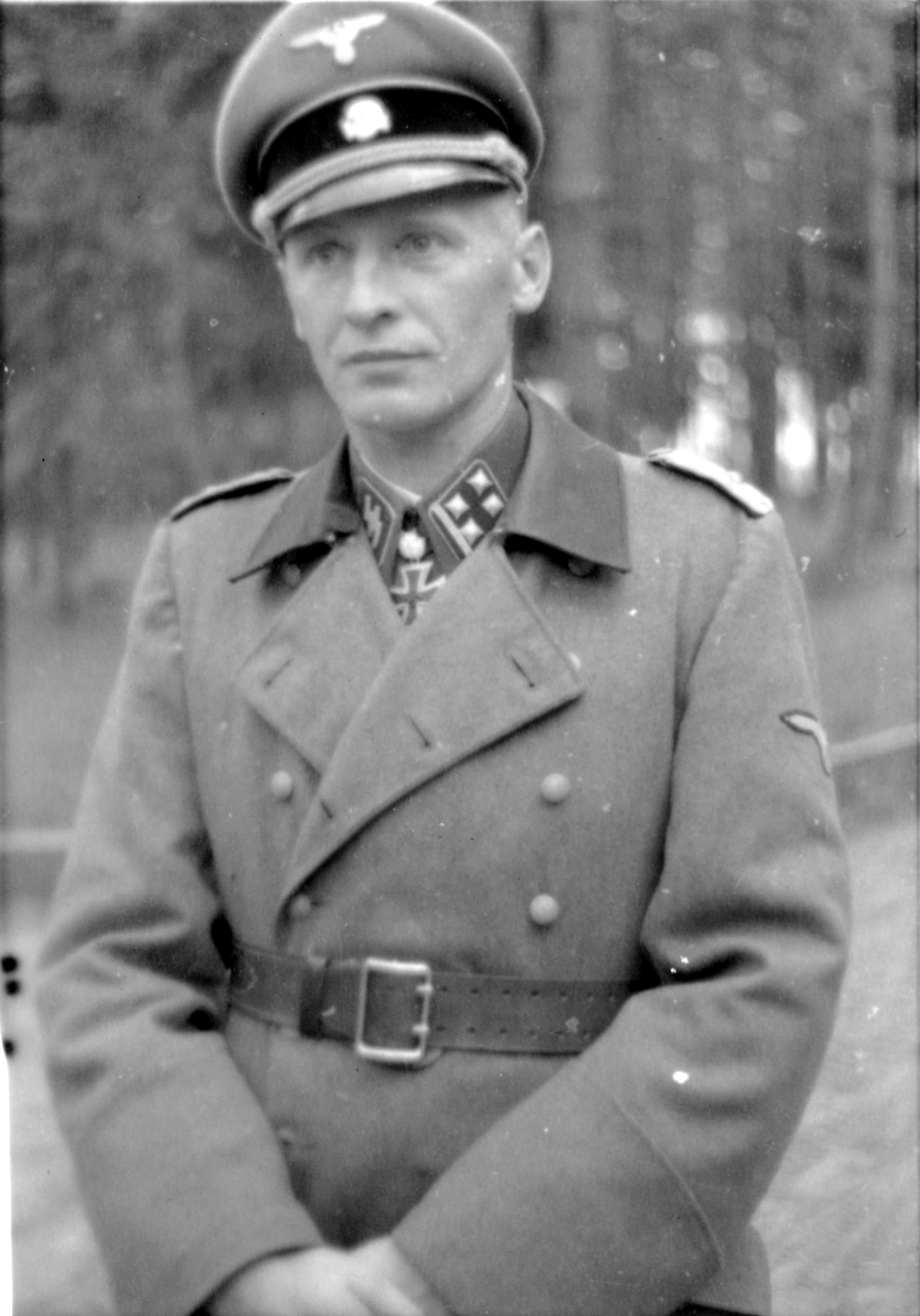
SS-Gruppenführer Paul Hausser.


SS-Gruppenführer Paul Hausser wearing early holster for polish radom pistol, 1940. The picture taken by someone close to him, as the photo came from a private album.


Ritterkreuz award ceremony for SS-Obersturmführer Fritz Vogt (Stoßtruppführer in 2.Schwadron / SS-Aufklärungs-Abteilung / SS-Verfügungs-Division), which were held at Culemborg, Netherlands, on 4 September 1940. Awarding the medal is SS-Gruppenführer und Generalleutnant der Waffen-SS Paul "Papa" Hausser (Kommandeur SS-Verfügungs-Division). Other pictures from this award ceremony can be seen HERE.


Ritterkreuz award ceremony for SS-Untersturmführer Ludwig Kepplinger (Zugführer in 11.Kompanie / III.Bataillon / SS-Infanterie-Regiment "Der Führer" / SS-Verfügungstruppe), 4 September 1940. Awarded the medal is SS-Gruppenführer und Generalleutnant der Waffen-SS Paul Hausser (Kommandeur SS-Verfügungstruppe). Other pictures from this award ceremony can be seen HERE.


Heinrich Himmler, Paul Hausser, and Karl Wolff.


This photograph by SS-Bildberichter Friedrich Zschäckel show the Ritterkreuz award ceremony for SS-Gruppenführer und Generalleutnant der Waffen-SS Paul Hausser (Kommandeur SS-Division "Reich"), which was held on 8 August 1941 on the Eastern Front during Unternehmen Barbarossa. The one who presented the medal was General der Panzertruppe Heinrich von Vietinghoff (Kommandierender General XXXXVI. Armeekorps). Even though he was a "Reich" Divisionskommandeur, Hausser was not the first person from this unit to receive this prestigious medal, but in fact was the seventh! The six men who preceded him were as follows: SS-Oberführer Georg Keppler (15 August 1940), SS-Oberführer Felix Steiner (15 August 1940), SS-Hauptscharführer Ludwig Kepplinger (4 September 1940), SS-Obersturmführer Fritz Vogt (4 September 1940 ), SS-Sturmbannführer Fritz Witt (4 September 1940), and SS-Hauptsturmführer Fritz Klingenberg (14 May 1941). Other pictures from this award ceremony can be seen HERE.


SS-Gruppenführer Paul Hausser in August 1941.


SS-Gruppenführer Paul Hausser.


SS-Gruppenführer Paul Hausser.


SS-Gruppenführer Paul Hausser.


SS-Gruppenführer Paul Hausser in September 1941.


From left to right: SS-Gruppenführer und Generalleutnant der Waffen-SS Paul "Papa" Hausser (Kommandeur SS-Division "Reich"), SS-Obersturmbannführer Werner Ostendorff (Ia Erster Generalstabsoffizier SS-Division "Reich"), and SS-Sturmbannführer Fritz Klingenberg (Kommandeur SS-Kradschützen-Bataillon 2 / SS-Division "Reich"). In many books and websites, it is stated that this photo was taken during the Unternehmen Taifun (Operation Typhoon, the invasion of Moscow) in November 1941. This is wrong! The reason? Because since October 14, 1941, Divisionskommandeur Hausser suffered severe injuries in the battle in the Borodino area, he had to be withdrawn from the front. His position as division commander was taken over by SS-Oberführer Wilhelm Bittrich. Hausser's injuries were so severe that he would only fully recovered in May 1942, and even then, he had to sacrifice his right eye (who is blind) and undergo surgery on part of his right jaw! In addition, in this photo, Hausser still holds the rank of SS-Gruppenführer (notice his collar), while in November 1941 he had already been promoted to SS-Obergruppenführer (promotion date October 1, 1941). Therefore, it can be concluded that this photo was most likely taken on a cold day in late September 1941, as summer was transitioning into autumn. In addition, here we can also clearly see that there are no signs of scars on Hausser's face and eyes. Other pictures from this occasion can be seen HERE.


SS-Obergruppenführer Paul Hausser in the summer 1942.


SS-Obergruppenführer Paul Hausser.


From April 23 to 26, 1943, Reichsführer-SS Heinrich Himmler (Chef der SS und Deutschen Polizei) visited the SS-Panzerkorps headquarter in Kharkov (Ukraine). During a meeting with the high-ranking officials of the Waffen-SS corps, Himmler emphasized the racial struggle of the Germanic people—with the Waffen-SS as their main spearhead—in countering the "spread of non-Aryan blood." Ironically, few believed the words of the SS Commander, because for those who were directly involved in the brutal and prolonged battles on the Eastern Front, the issue was no longer about racial and ideological conflicts, but rather a struggle for survival in holding back the increasingly powerful Russian forces over time! This photograph by SS war correspondent Friedrich Zschäckel shows Himmler inspecting the SS-Panzer-Regiment 2, which was part of the SS-Panzergrenadier-Division "Das Reich." Here, the Reichsführer-SS (center) is flanked by SS-Gruppenführer und Generalleutnant der Waffen-SS Walter Krüger (Kommandeur SS-Panzergrenadier-Division "Das Reich") on his left, and SS-Obergruppenführer und General der Waffen-SS Paul Hausser (Kommandierender General SS-Panzerkorps) on his right.


SS-Obergruppenführer Paul Hausser.


SS-Gruppenführer Paul Hausser with Wehrmacht officers. The SS Ritterkreuzträger with him is Sylvester Stadler.


Sepp Dietrich's 51st birthday celebration near Kharkov on 28 May 1943 which was attended by high-ranking Waffen-SS officers. Back to the camera from left to right: SS-Obergruppenführer und General der Waffen-SS Paul Hausser (Kommandierender General SS-Panzerkorps), SS-Brigadeführer und Generalmajor der Waffen-SS Herbert Otto Gille (Kommandeur SS-Panzergrenadier-Division "Wiking"), and SS-Obergruppenführer und General der Waffen-SS Josef "Sepp" Dietrich (Kommandeur SS-Panzergrenadier-Division "Leibstandarte SS Adolf Hitler"). Seated facing the camera from left to right: Oberstleutnant Gerhard Engel (Adjutanten des Heeres beim Führer und Oberster Befehlshaber der Wehrmacht), SS-Oberführer Hermann Prieß (Kommandeur SS-Panzergrenadier-Division "Totenkopf"), SS-Obersturmbannführer Hans Albin Freiherr von Reitzenstein (Kommandeur SS-Panzer-Regiment 2 / SS-Panzergrenadier-Division "Das Reich"), and SS-Obersturmbannführer Otto Baum (Kommandeur SS-Panzergrenadier-Regiment "Totenkopf" / SS-Panzergrenadier-Division "Totenkopf"). Army officer Engel was also there as a special guest from the Führerhauptquartier for Hitler's former bodyguard commander's special day. Most photos from Dietrich's birthday were taken by SS-Kriegsberichter Klaus Weill, though it is not certain about this one.


From left to right: SS-Obergruppenführer und General der Waffen-SS Paul Hausser (Kommandierender General II. SS-Panzerkorps), SS-Oberführer Hermann Prieß (Kommandeur SS-Panzergrenadier-Division "Totenkopf"), and SS-Standartenführer Heinz Lammerding (Chef des Stabes II. SS-Panzerkorps). The photo was taken in early summer 1943 during Hausser's visit to the SS Totenkopf Division which were under his command. Other pictures from this occasion can be seen HERE.


The combat briefing of SS-Panzergrenadier-Division "Das Reich" during the Battle of Kursk, summer 1943. From left to right: unknown, SS-Obersturmbannführer Karl Kreutz (Kommandeur SS-Panzer-Artillerie-Regiment 2 "Das Reich"), SS-Standartenführer Heinz Harmel (Kommandeur SS-Panzergrenadier-Regiment "Deutschland"), SS-Obergruppenführer und General der Waffen-SS Paul Hausser (Kommandierender General II. SS-Panzerkorps), and SS-Standartenführer Dipl.-Ing. Heinz Lammerding (Kommandeur Kampfgruppe Lammerding).


The combat briefing of SS-Panzergrenadier-Division "Das Reich" during the Battle of Kursk, summer 1943. Wearing stahlhelm at left is SS-Standartenführer Heinz Harmel (Kommandeur SS-Panzergrenadier-Regiment "Deutschland"), while in front of him with the eye-patch is SS-Obergruppenführer und General der Waffen-SS Paul Hausser (Kommandierender General II. SS-Panzerkorps), followed by SS-Obersturmbannführer Sylvester Stadler (Kommandeur SS-Panzergrenadier-Regiment "Der Führer"). Between Harmel and Hausser is SS-Sturmbannführer Rudolf Enseling (Kommandeur SS-Panzer-Pionier-Bataillon 2 "Das Reich"), while with the back to the camera at right is possibly SS-Obersturmführer Ortwin Pohl (O4 SS-Panzergrenadier-Division "Das Reich"). In this picture we can see that Korpskommandeur Hausser is wearing the Goldenes Parteiabzeichen der NSDAP. He just got the honor pin recently, on 30 January 1943, and only became the member of the Nazi Party in 1937. Hausser only wore the badge when he knew official photographers were around!


SS-Obergruppenführer Paul Hausser with eyepatch.


SS-Obergruppenführer Paul Hausser with eyepatch.


SS-Obergruppenführer Paul Hausser, 28 July 1943.


SS-Obergruppenführer Paul Hausser.


This photo is taken from the book "Die Ritterkreuzträger der Deutschen Wehrmacht 1939 - 1945, Teil VI: Die Gebirgstruppe. Bd. 1: A - K" by Franz Thomas and Günter Wegmann, and it shows members of the Generalstab of Heeresgruppe B (Rommel) in northern Italy in the fall of 1943. This photo was taken during an anti-Partisan operation in Slovenia conducted by II. SS-Panzerkorps (Hausser), which lasted from 20 September to 20 November 1943. From left to right: Generalleutnant Konrad Haase (General z.b.V. Heeresgruppe B), General der Infanterie Gustav-Adolf von Zangen (Kommandierender General LXXXVII. Armeekorps), unknown, unknown, Generalintendant (Luftwaffe) Dr. Wilhelm Sander (Heeresgruppenintendant Heeresgruppe B), Generalleutnant Alfred Gause (Chef des Generalstabes Heeresgruppe B), unknown, Generalfeldmarschall Erwin Rommel (Oberbefehlshaber Heeresgruppe B), possibly Generalstabsarzt Dr.med. Karl Meinardus (Heeresgruppenarzt Heeresgruppe B), General der Gebirgstruppe Valentin Feurstein (Kommandierender General LI. Gebirgskorps), and SS-Obergruppenführer und General der Waffen-SS Paul Hausser (Kommandierender General II. SS-Panzerkorps).


Generalfeldmarschall Erwin Rommel (left, Oberbefehlshaber Heeresgruppe B) and SS-Obergruppenführer und General der Waffen-SS Paul Hausser (Kommandierender General II. SS-Panzerkorps). The picture was probably taken at the northern sector of the Italian front, autumn 1943, when Hausser and his troops involved in the anti-partisan operation in Slovenia. Rommel just recently chosen as the Commander in Chief of Army Group B, and he is still wearing his tropical uniform used in North Africa. Other pictures from this occasion can be seen HERE.


The photo, which was taken at the end of April 1944, shows high-ranking Wehrmacht and SS officers seriously observing a close air support demonstration by Henschel Hs 129 and Junkers Ju 87 Luftwaffe aircrafts with the panzers and Panzergrenadier troops on the ground. Front row, from left to right: Generalleutnant Dipl.Ing. Gerhard Conrad (Kommandeur Luftflottentruppen der Luftflotte 4), General der Panzertruppe Erhard Raus (Oberbefehlshaber 4. Panzerarmee), SS-Obergruppenführer und General der Waffen-SS Paul Hausser (Kommandierender General II. SS-Panzerkorps), and Oberst Werner Friebe (mit der Führung beauftragt 8. Panzer-Division).


From left to right: SS-Obergruppenführer und General der Waffen-SS Paul Hausser (Oberbefehlshaber 7. Armee), Generalfeldmarschall Erwin Rommel (Oberbefehlshaber Heeresgruppe B), and General der Fallschirmtruppe Eugen Meindl (Kommandierender General II. Fallschirmkorps). The photo was taken on July 14, 1944, in Villebaudon (St.-Lô/Normandy), which was the headquarters of the II. Fallschirmkorps. At that time, Rommel (supervising Hausser) and Hausser (supervising Meindl) were conducting an inspection to assess the current situation of the fierce battle against the American army in St.-Lô. This photo was taken a few weeks after the replacement of the commander of the 7th Army from Generaloberst Friedrich Dollmann (who committed suicide) to SS-Obergruppenführer Hausser, which took place on June 28, 1944. A little attention is drawn to the camouflage jacket worn by Hausser, as well as the M43 field cap with officer's insignia worn by Meindl!


Three senior German commanders in the Battle against Allied troops in St.-Lô area, Normandy, 16 July 1944. From left to right: General der Fallschirmtruppe Eugen Meindl (Kommandierender General II. Fallschirmkorps), SS-Obergruppenführer und General der Waffen-SS Paul Hausser (Oberbefehlshaber 7. Armee), and Generalleutnant Dipl.Ing. Richard Schimpf (Kommandeur 3. Fallschirmjäger-Division). Behind Schimpf is SS-Hauptsturmführer Karl-Heinz Boska (Adjutant Oberbefehlshaber 7. Armee). In this meeting Meindl told his commander, Hausser, that the German defense position at St.-Lô was untenable any longer due to the superiority of the Allied forces on land and in the air. The next day Hausser forwarded this message to his commander, Generalfeldmarschall Erwin Rommel (Oberbefehlshaber Heeresgruppe B). Unknowingly, on the same day Rommel was badly wounded by Allied air strikes and went to the intensive treatment at the hospital! This photo is most likely taken at Villebaudon which is the base of II. Fallschirmkorps. Other pictures from this occasion can be seen HERE.


SS-Oberstgruppenführer Paul Hausser.


Paul Hausser and Kurt Meyer.


Paul Hausser and Wilhelm Bittrich in the late 1960's.


Ritterkreuzträger who were present during the funeral of SS-Oberstgruppenführer Paul Hausser: 9.SS-Obersturmbannführer Otto Weidinger, 10.SS-Brigadeführer Heinz Harmel, 11.Oberstleutnant der Reserve Konrad Zeller, and 12.Oberst Walther Dahl. Paul Hausser died at the age of 92 on 21 December 1972 at Ludwigsburg, Germany, while the funeral taken place on 28 December 1972 in Neuer Friedhof Ludwigsburg, started from 02:45 PM.


Source:
https://alifrafikkhan.blogspot.com/2018/06/foto-paul-hausser.html
https://www.lexikon-der-wehrmacht.de/
https://en.wikipedia.org/
https://www.tracesofwar.com/
https://grokipedia.com/
https://rk.balsi.de/index.php?action=list&cat=300
https://www.unithistories.com/units_index/index.php?file=/officers/personsx.html
https://web.archive.org/web/20091027052912fw_/http://geocities.com/orion47.geo/index2.html
https://forum.axishistory.com/
https://www.wehrmacht-awards.com/forums/
https://www.bundesarchiv.de/en/
https://www.geni.com/
https://books.google.com/
https://de.wikipedia.org/wiki/Paul_Hausser
https://www.wikitree.com/wiki/Hausser-99
Karl-Heinz Mathias: Paul Hausser, Generaloberst der Waffen-SS: "Ich diene". Ein Lebens- und Zeitbild
Paul Hausser: Waffen-SS im Einsatz (1953, Pless Verlag)
Paul Hausser: Soldaten wie andere auch (1966, Munin Verlag)
Weitere Quellen aus Bundesarchiv und Google Books zu Reichswehr- und Waffen-SS-Personalakten.

Sunday, December 3, 2023

Paul Hausser with Das Reich Officers during Kursk


The combat briefing of SS-Panzergrenadier-Division "Das Reich" during the Battle of Kursk, summer 1943. Wearing stahlhelm at left is SS-Standartenführer Heinz Harmel (Kommandeur SS-Panzergrenadier-Regiment "Deutschland"), while in front of him with the eye-patch is SS-Obergruppenführer und General der Waffen-SS Paul Hausser (Kommandierender General II. SS-Panzerkorps), followed by SS-Obersturmbannführer Sylvester Stadler (Kommandeur SS-Panzergrenadier-Regiment "Der Führer"). Between Harmel and Hausser is SS-Sturmbannführer Rudolf Enseling (Kommandeur SS-Panzer-Pionier-Bataillon 2 "Das Reich"), while with the back to the camera at right is possibly SS-Obersturmführer Ortwin Pohl (O4 SS-Panzergrenadier-Division "Das Reich"). In this picture we can see that Korpskommandeur Hausser is wearing the Goldenes Parteiabzeichen der NSDAP. He just got the honor pin recently, on 30 January 1943, and only became the member of the Nazi Party in 1937. Hausser only wore the badge when he knew official photographers were around!

Source :
"Die 10. SS-Panzer-Division Frundsberg" by Rolf Michaelis

Saturday, November 25, 2023

Das Reich Command Conference in 1943


A Das Reich command conference in the Eastern Front, late summer of 1943. SS-Gruppenführer und Generalleutnant der Waffen-SS Walter Krüger (Kommandeur SS-Panzergrenadier-Division "Das Reich") is at center, surrounded by his regimental commanders. From the left are SS-Obersturmbannführer Hans-Albin Freiherr von Reitzenstein (Kommandeur SS-Panzer-Regiment 2 "Das Reich"), SS-Standartenführer Heinz Harmel (Kommandeur SS-Panzergrenadier-Regiment "Deutschland"), Divisionskommandeur Krüger, unknown orderly officer, and SS-Obersturmbannführer Sylvester Stadler (Kommandeur SS-Panzergrenadier-Regiment "Der Führer").

Source :
"Images of War: Knight's Cross Winners of the Waffen SS" by Marc Rikmenspoel

Friday, January 1, 2021

Bio of SS-Brigadeführer Sylvester Stadler (1910-1995)

Sylvester Stadler

Date of Birth: 30.12.1910 - Fohnsdorf, Styria (Austria-Hungary)
Date of Death: 23.08.1995 - Königsbrunn bei Schwabmünchen, Schwaben, Bayern (Germany)

Nickname: Vestl
Height: 184cm (6 ft ½ in)
Weight: 79 kg weight (174 lb)
Chest size: 93 cm relaxed, to 99 cm expanded (37 in to 39 in)
NSDAP Number: 4 159 018 (02.05.1933)
SS Number: 139 495 (02.05.1933)
Father: Johann Stadler (miner)
Siblings: 4 brothers and 2 sisters

Promotions:
02.05.1933 SS-Anwärter
03.01.1934 SS-Mann
20.04.1934 SS-Rottenführer
20.05.1934 SS-Scharführer
20.04.1935 SS-Oberscharführer
21.01.1936 SS-Standartenjunker
25.02.1936 SS-Standartenoberjunker
20.04.1936 SS-Untersturmführer
12.09.1937 SS-Obersturmführer
30.06.1939 SS-Hauptsturmführer
01.09.1942 SS-Sturmbannführer der Waffen-SS
20.04.1943 SS-Obersturmbannführer der Waffen-SS
30.01.1944 SS-Standartenführer der Waffen-SS
01.08.1944 SS-Oberführer der Waffen-SS
04.05.1945 SS-Brigadeführer und Generalmajor der Waffen-SS (mit Wirkung vom 20.04.1945)

Career:
02.05.1933 Joined the Austrian NSDAP and the SS
00.00.1933 Joined the Austrian SS Legion in Germany and transferred to Dachau
00.00.1934 Zugführer in SS-Standarte "Deutschland"
00.00.1935 Member of 7.Sturm / II.Sturmbann / SS-Standarte "Germania"
24.04.1935 - 10.02.1936 Attended SS-Junkerschule Bad Tölz
10.02.1936 - 04.04.1936 Attended the platoon leaders training course at Dachau
12.11.1936 - 18.02.1937 Attended driver's teaching course at the Vehicle School at Bernau
00.00.193_ Chef 1.Sturm / Nachrichten-Abteilung SSVT
00.06.1939 Chef 1.Kompanie / SS-Nachrichten-Abteilung 2
07.06.1940 Wounded in action and was being treated by the doctor the Signals Battalion
00.00.1940 Chef 5.Kompanie / SS-Regiment "Der Führer"
20.09.1941 - 15.10.1941 Führer II.Bataillon / SS-Regiment "Deutschland"
15.10.1941 - 18.10.1941 Wounded in action
00.00.1941 - 00.02.1942 Tactical instructor at SS-Junkerschule Bad Tölz
01.03.1942 - 07.06.1942 Führer II.Bataillon / SS-Infanterie-Regiment "Der Führer"
07.06.1942 - 20.04.1943 Kommandeur II.Bataillon / SS-Panzergrenadier-Regiment 4 "Der Führer"
20.04.1943 Kommandeur SS-Panzergrenadier-Regiment 4 "Der Führer"
03.07.1944 - 31.07.1944 Kommandeur 9. SS-Panzer-Division "Hohenstaufen"
31.07.1944 - 10.10.1944 Wounded in action, returns to the service after recovery
10.10.1945 - 08.05.1945 Kommandeur 9. SS-Panzer-Division "Hohenstaufen"
08.05.1945 Surrendered his division to the U.S. Army in Austria
08.05.1945 - 00.00.1948 Released from U.S. captivity

Decorations and Awards:
01.09.1936 Deutsches Olympia-Ehrenzeichen II. Klasse
00.12.1936 Julleuchter der SS
20.04.1937 Totenkopfring der SS
01.12.1937 Deutsches Reichssportabzeichen in Bronze
01.12.1937 SA-Sportabzeichen in Bronze
01.12.1937 Ehrendegen des Reichsführers-SS
00.00.1938 Medaille zur Erinnerung an den 13. März 1938
00.00.1939 Medaille zur Erinnerung an den 1. Oktober 1938
00.00.1939 Medaille zur Erinnerung an den 1. Oktober 1938 mit Spange “Prager Burg“
25.09.1939 Eisernes Kreuz II.Klasse
15.06.1940 Verwundetenabzeichen, 1939 in Schwarz
21.06.1940 Infanterie-Sturmabzeichen in Silber
26.06.1940 Eisernes Kreuz I.Klasse
01.05.1941 SS-Dienstauszeichnung 3. Stufe
00.00.1942 Medaille "Winterschlacht im Osten 1941/42" (Ostmedaille)
00.00.194_ Two Panzervernichtungsabzeichen in Silber (disputed)
06.04.1943 Nahkampfspange in Silber
06.04.1943 Ritterkreuz des Eisernen Kreuzes #1676, as SS-Sturmbannführer and Kommandeur II.Bataillon / SS-Panzergrenadier-Regiment “Der Führer” / SS-Panzergrenadier-Division “Das Reich” (based on a recommendation dated 02.04.1943 and signed by Divisionführer Herbert-Ernst Vahl; endorsed by Korps Kom. Gen. Paul Hausser; approved by Chef des Heerespersonalamtes, Generalmajor Rudolf Schmudt, 03.04.1943; presented by Walter Krüger). Stadler's Ritterkreuz recommendation reads as follows: "SS-Sturmbannführer Stadler has since 07.06.42 been the acting Commander of the II./SS-Pz.Gr.Rgt. "Der Führer". SS-Sturmbannführer Stadler and his battalion, after breaking weak resistance in two villages, reached the town of Jefremowka on the evening of 01.03.43. Reconnaissance patrols detected strong enemy forces occupying the fortified town. The intention of the regiment was to attack early on 02.03.43, after a detailed preparation. Then SS-Sturmbannführer Stadler decided independently to take advantage of the night and to start the attack with the support of two assault guns. He himself accompanied the leading Kompanie through the intense defensive fire until he reached the town, deployed there with his Kompanies for the attack and penetrated with them deep into the town. With the first light of the morning he continued the annihilation, and by 08:00 hours the town had fallen. About 250 enemy dead, 12 tanks, 17 artillery guns and 38 anti-tank guns were left on the battlefield. Thanks to Stadler's independent decision of attacking the town by night without preparation, the first phase of the success was accomplished. An attack in daylight could have been done only with heavy losses. Only through his resolute performance and personal action was he able to push forward his Kompanies through the heavy fight into the town to complete the success. With his daring bravery he allowed the division to establish, the very same day, a link with the SS-Pz.Gr.Div. "Adolf Hitler". With this, the isolation and encirclement of one-and-a-half Russian tank corps in the area of Schljaybwaja was completed, making possible their ensuing annihilation by the Totenkopf-Division."
16.09.1943 Ritterkreuz des Eisernen Kreuzes mit Eichenlaub #303, as SS-Obersturmbannführer and Kommandeur SS-Panzergrenadier-Regiment “Der Führer“ / 2.SS-Panzergrenadier-Division “Das Reich“ (based on a recommendation dated 26.08.1943 and signed by Divisionskommandeur Walter Krüger; personally presented by Adolf Hitler). Stadler's Eichenlaub recommendation reads as follows: "During one of the most dangerous phases of the Fourth Battle of Kharkov, on the 22.08.43, the SS-Pz.Gren.Div. "Das Reich", together with a simultaneous change of attachment from the III. Pz.Korps to the XI. Armee-Korps, was shifted from its current sector to the south of Bogodukhov. They were thrown 45 km to the east in the area of Ljubotin. The task of the division was to hinder the enemy breakthrough over the Udy towards the southeast, which would cut off the divisions defending Kharkov.SS-Obersturmbannführer Stadler, with elements of the SS-Pz.Gren.Rgt. "Der Führer" pulled out from its current battle area on 21.08.43, had the assignment of taking positions in Korotitsch, dealing with the Soviet break-in points on the boundary between the 168. and 198. I.D., and winning back the old main fighting line. Stadler, preceding his Regiment, reached Korotitsch for the purposes of reconnaissance and found it empty. The infantry positioned there had abandoned it, falling back to the south. Stadler only found an artillery advance observer that he immediately put under his command. As SS-Obersturmbannführer Stadler reached the northern edge of the town, three tanks with mounted infantry rolled towards Korotitsch. Stadler and his handful of men occupied their positions. He himself manned the machine-gun and halted the opponent. After the destruction of one tank by the Battery of the advance observer, they withdrew to the southeast until their motorcycle company reached the village. With this Stadler held the village against the newly developing strong enemy attacks. Fifteen tanks, along with an infantry battalion, attacked Korotitsch from the north. The bulk of the infantry was separated from the tanks in hard fighting. Some tanks broke through, and with them part of the infantry infiltrated into the village. But SS-Obersturmbannführer Stadler decided to hang on to the village, as it was a key point in the gap between the two German infantry divisions engaged in bitter defensive battles. Stadler held the positions here in an all-round defense in spite of the unbroken heavy fire of enemy artillery, rockets and tanks. Demolition troops, anti-tank guns and the attached Heer battery put out of action seven tanks. After a hard defensive battle lasting for two hours, during which SS-Obersturmbannführer Stadler was the soul of the defense, the I./SS-Pz.Gr.Rgt. "Der Führer" arrived and battled their way towards the positions on the northern edge of the town, improving the situation. But again and again the opponent attempted to break through. Under unheard-of heavy artillery fire, T-34s in small groups continually approached the village. The other two battalions of the regiment could reach the objective only under cover of darkness, following a 45-kilometer long march all while being harassed by continuous enemy air attacks and the columns flowing back. Immediately SS-Obersturmbannführer Stadler deployed his regiment for an attack northwards, and with the help of parts of the II./SS-Pz.Rgt. "Das Reich" that also had arrived late in the evening, managed to close the six-kilometer wide breach. The breakthrough of enemy tanks and infantry towards the southeast, and with it the encirclement of the three divisions fighting in Kharkov was prevented through the bold resolution and the defensive skill of SS-Obersturmbannführer Stadler and his men. The XI. Armee-Korps was able to move back the divisions fighting along the north bank of the Udy. SS-Obersturmbannführer Stadler bears a decisive share in this thanks to his heroic personal performance and his independent decisiveness. In all the actions of this summer battle, SS-Obersturmbannführer Stadler has proven himself best at the head of his regiment, the command of which he assumed on 20.04.43. During the breakthrough across the second system of positions on 07.07.43, near Lutschki north of Belgorod in which he, exploiting the favourable reconnaissance, stormed and penetrated at his own decision and before the scheduled beginning of the attack; in the defensive battle against tanks near Kalinin on the 07. and 14.7.43; during the attack on Marinovka that made it possible to recapture the old main fighting line along the Mius; and in the defensive battles with weak elements of the division at the southwest of Solotschew in the period from 6-11.08.43, SS-Obersturmbannführer Stadler proved to be a shining example to his men with his personal readiness for action, courage and bravery. The leadership of his regiment has been wielded with model prudence and skill. I consider the award of the Oakleaves to the Knight's Cross of the Iron Cross to SS-Obersturmbannführer Stadler as especially justified because of the outstanding success of his decisions and personal actions on the battlefield."
12.12.1943 Nahkampfspange in Gold
16.07.1944 Mentioned in the Wehrmachtbericht
06.05.1945 Ritterkreuz des Eisernen Kreuzes mit Eichenlaub und Schwertern #152, as SS-Brigadeführer und Generalmajor der Waffen-SS and Kommandeur 9. SS-Panzer-Division “Hohenstaufen“. Awarded for his leadership of the 9. SS-Panzer Division during its battles around Caen, in the battle of the Bulge and the fighting in Hungary (here he particularly distinguished himself in the Berhida area on the 22.03.1945). This is one of several awards made by “Sepp” Dietrich on that date, which, in light of new research by Veit Scherzer, were technically invalid as they were not authorized by the SS-Personalhauptamt or Heerespersonalamt). Number is according to the date of awarding. Confirmation is made on the basis of a statement under oath to the Ordensgemeinschaft der Ritterkreuzträger made by Generaloberst der Waffen-SS Sepp Dietrich.

------------------------------------------------------------------------

Sylvester Stadler was born on 30 December 1910 as the sixth child of miner Johann Stadler in Fohnsdorf in Styria, Austria. After attending the elementary and secondary school in Judenburg, he trained as an electrician for three years and later found work as an in various different companies. Due to his entry into the NSDAP and the SS on 2 May 1933, Stadler experienced enormous difficulties in his professional life. Because membership of the party and the SS was then illegal, the Austrian government under Engelbert Dollfuss and Kurt Schussnigg charged him with high treason and propagating NSDAP propaganda. Like other early Austrian party members, such as Vinzenz Kaiser, who experienced the same issues, he was forced to flee Austria. Stadler joined the Austrian SS Legion, was transferred to Dachau at the end of 1933, and began his career within the Waffen-SS, in 1934, writing from the SS Hilfswerk Dachau on 5 June 1934: “I hereby declare that I am striving for service in the SS as a lifelong profession. Rttf. Stadler”

Standing six feet tall, and described of Nordic and Dinaric appearance, Stadler appeared a perfect candidate for SS membership. However, on his application to the Waffen-SS Stadler was subjected to an assessment of his general characteristics. While he fitted the classical SS profile physically, the assessing body described him as suffering from Schizothymia and Cyclothymia. In modern day terms, Schizothymia is a temperament related to schizophrenia in a way analogous to cyclothymia's relationship with bipolar disorder. A schizothymic individual displays a flat affect and a high degree of introversion, withdrawing from social relations generally; nevertheless, some individuals with this characteristic may be able to achieve relatively affable social relations and a measure of affectivity in some situations. As a kind of temperament, schizothymic personality traits are thought to be more or less innate rather than the result of socialization (or a lack thereof). Cyclothymia, or cyclothymic disorder, is a relatively mild mood disorder. In cyclothymic disorder, moods swing between short periods of mild depression and hypomania, an elevated mood. The low and high mood swings never reach the severity or duration of major depressive or full mania episodes. People with cyclothymic disorder have milder symptoms than occur in full-blown bipolar disorder.

A currently practicing psychiatric nurse stated, “I would interpret this to mean that the subject was emotionally cold, had trouble forming connections with others, and was subject to mild manic bursts of energy alternating with bouts of depression.”

Stadler's pyschological state was taken into consideration, but would become under more exacting scrutiny in the near future.

On 28 March 1935, as a member of II./SS1, Stadler underwent a psychological profiling examination, undertaken by a panel of five doctors. The findings of the examination stated:

“Stadler is a modest and simple man of simple appearance and self-giving. He is not intellectually incapable of grasping and pursuing a thought, but his thinking progresses too slowly and for higher or more difficult situations and demands he lacks training and experience. He finds it difficult to be extroverted, and to form social relationships. His practical-technical understanding is sufficient. His intellectual condition makes it difficult for him to assert himself with towards his comrades. his actions are more impulsive, but slow, and he is too modest. He is more quiet and withdrawn, introverted towards himself than adventurous and daredevilish. However, he will faithfully and reliably carry out any orders given, due to his high personal ambition. He will act carefully and cautiously. His helpful, comradely attitude is to be especially emphasized.

Slow and cumbersome in thinking and acting, reserved, too modest and quiet, dutiful and decent.

Decent and valuable personality, but mentally slow, dull and termperamentless, without inner freedom, without leadership qualities.

A modest and honest character, but mentally too simple and too slow, without fresh and energetic temperament and without decisive will activity.”

According to the military examiners, the candidate was “not suitable” to become an SS officer.

Despite this stunning setback to his career, Stadler struggled on, until a fortunate asssesment at Dachau, on 4 February 1935 by SS-Standartenführer Berhard Voß stated that SS-Unterscharführer Stadler had since the creation of the Sturmbann, served as a group leader with SS-Sturm 7/II/SS1, giving special mention to Stadler's ability as a lecturer, and trainer of men. Assertive, with impeccable behaviour on and off duty, Stadler was described as well suited for the role as an SS officer.

Promoted to SS-Standartenjunker, Stadler was sent to the SS-Junkerschule at Bad Tölz, on the third platoon leaders course, which ran from 24 April 1935 until 10 February 1936. Ranked twenty-one out of the candidates, Stadler completed the course, and passed the final examination with the following grades:

1. in ideology: good.
2. in tactics: quite good.
3. in terrain: sufficient.
4. in weaponry: quite good.
5. in engineering: quite good.
6. in intelligence: quite good.
7. in motor vehicles: sufficient.
8. in flying: quite good.
9. in the army: quite good.
10. in cartography: quite good.
11. in general military service: quite good.
12. in armed service: sufficient.
13. in sport: good
14. in riding: good.

With knowledge proven and overall quite good performance shown, “Stadler is a very calm, serious and well-balanced character, who after some minor errors has dedicated himself to National Socialist ideology. It is thanks to his ambitious, steady diligence that he has mastered the tasks set. This is particularly to be recognized, since his school education was not quite sufficient. His reserved calmness distinguishes him especially. He is a suitable SS leader.” Stadler was commissioned as SS-Untersturmführer on 20 April 1936. Directly following the course at Bad Tölz, Stadler then attended the platoon leaders training course at Dachau from 10 February 1936 until 4 April 1936. Between 12 November 1936 and 18 February 1937, Stadler attended a driver's teaching course, for all three classes of license at the Vehicle School at Bernau. Following his promotion to SS-Oberstumführer on 12 September 1937,

Presumably due to his trade as an electrician, Stadler to posted to the SS-Signals Battalion of the “Der Führer” Regiment as commander of the telephone company. Stadler was evidently capable in his capacity of company commander, as his request for promotion to SS-Hauptsturmführer stated “Clear and open, energetic, with a swift perspective faculty, Obersturmführer Stadler has led the company for five months, and demonstrated during field exercises that he was clearly up to the task. He demonstrates calm and safe leadership, and his sense of justice should be emphasized.” Promoted to SS-Hauptsturmführer on 30 May 1939, Stadler had clearly surpassed all prior expectations of his performance by the panel of medical experts!

Stadler took part in the Polish campaign, and was awarded the EKII on 2 October 1939. In the Western campaign Stadler proved himself still further, and he was awarded the EKI on 25 July 1940. Wounded in the West, the SS Signals Replacement Battaltion reported that Haupsturmführer Stadler, had been convalescing from 7 June 1940 is in his flat in Unna and was being treated by the doctor the Signals Battalion's Doctor (Florian Berger states Stadler was wounded in the shoulder, but there is no supporting evidence in Stadler's file).

After returning from convalescence and returning to II./SS “Der Führer”, Stadler fought in the Balkan campaign, and Operation Barbarossa with his unit, and was wounded again between 15-18 October 1941. Having suitably impressed his superiors due to his tactical ability, Stadler was transferred to the Junkerschule Tölz as a tactical instructor. The commander of Training Group B, Sturmbannführer Siegel, evaluated Stadler on 7 May 1942 as open, decent, and almost good-natured in character, but quiet and modest. “A strong, fanatical National Socialist, he always endeavours to do his duty, making his experience,and sound advice easily accessible. As a superior he has an educational effect on subordinates through his personality, and is popular with his subordinates because of his constant care. In his military ability, he is a pronounced practitioner who deepens and expands his tactical knowledge with much diligence and great perseverance. His performance in and out of service is exemplary. With average general education, he is always anxious to expand his general knowledge through self-study. Regarding his reputation as a subordinate he is an easily controllable and sympathetic subordinate, who is politely modest and courteous. As a comrade his very popular and appreciated, and unselfish, almost to the point of self-sacrifice.

Due to his great practical ability, his use as a battalion commander is suggested.” The commander of the JS-Tölz, Standartenführer Dörffler-Schuband fully agreed with the above assessment, commenting, “Stadler is a pronounced personality with particularly high character values. Less suitable as a teacher, he is an excellent front officer.”

Returning to his regiment, regimental commander, Obersturmbannführer Otto Kumm wrote succinctly of Stadler on 3 July 1942, “Excellent performances as commander of 5./SS "DF" and II./SS "D" in tactical ability, as tactics teacher at the JS Tölz, and as acting commander of II./SS "DF". He is a clear, calm, reliable character, of noble disposition, and a brave leader. He has good military training, a special ability to teach, and extensive practical training experience. Excellent leadership qualities proven in combat.”

The division had fought outside Moscow, at Cholm and Velikie Luki (Berger claims Stadler was again wounded but this is unsupported by his file), and along the Rhzev-Vjasma salient.

Promoted to Sturmbannführer, Stadler and his regiment participated in the fighting to retake Kharkov, which would see him awarded the 1676th Knight's Cross of the Iron Cross, for his actions, recommend by divisonal commander Herbert-Ernst Vahl, endorsed by Paul Hausser;

“SS-Sturmbannführer Stadler has since 7 June 1942 been the acting Commander of the II./SS-Pz.Gr.Rgt. "Der Führer". SS-Sturmbannführer Stadler and his battalion, after breaking weak resistance in two villages, reached the town of Jefremowka on the evening of 1 March 1943. Reconnaissance patrols detected strong enemy forces occupying the fortified town.

The intention of the regiment was to attack early on 2 March 1943, after a detailed preparation. Then SS-Sturmbannführer Stadler decided independently to take advantage of the night and to start the attack with the support of two assault guns. He himself accompanied the leading Kompanie through the intense defensive fire until he reached the town, deployed there with his Kompanies for the attack and penetrated with them deep into the town. With the first light of the morning he continued the annihilation, and by 08:00 hours the town had fallen. About 250 enemy dead, 12 tanks, 17 artillery guns and 38 anti-tank guns were left on the battlefield!

Thanks to Stadler's independent decision of attacking the town by night without preparation, the first phase of the success was accomplished. An attack in daylight could have been done only with heavy losses. Only through his resolute performance and personal action was he able to push forward his Kompanies through the heavy fight into the town to complete the success. With his daring bravery he allowed the division to establish, the very same day, a link with the SS-Pz.Gr.Div. "Adolf Hitler". With this, the isolation and encirclement of one-and-a-half Russian tank corps in the area of Schljaybwaja was completed, making possible their ensuing annihilation by the Totenkopf-Division."

By this point Stadler had received the Ritterkreuz on 6 April 1943 and the Close Combat Clasp in Silver, was promoted to command the “Der Fuhrer” Regiment, and promoted to Obersturmbannführer on 20 April 1943.

In the bitter fighting around Kharkov, Stadler again again excelled himself, and less than six months later was awarded the Eichenlaub to the Ritterkreuz, recommended by Gruppenführer Walter Krüger, for the following action;

"During one of the most dangerous phases of the Fourth Battle of Kharkov, on the 22 August 1943, the SS-Pz.Gren.Div. "Das Reich", together with a simultaneous change of attachment from the III. Pz.Korps to the XI. Armee-Korps, was shifted from its current sector to the south of Bogodukhov. They were thrown 45 km to the east in the area of Ljubotin. The task of the division was to hinder the enemy breakthrough over the Udy towards the southeast, which would cut off the divisions defending Kharkov.

SS-Obersturmbannführer Stadler, with elements of the SS-Pz.Gren.Rgt. "Der Führer" pulled out from its current battle area on 21 August 1943, had the assignment of taking positions in Korotitsch, dealing with the Soviet break-in points on the boundary between the 168. and 198. I.D., and winning back the old main fighting line.

Stadler, preceding his Regiment, reached Korotitsch for the purposes of reconnaissance and found it empty. The infantry positioned there had abandoned it, falling back to the south. Stadler only found an artillery advance observer that he immediately put under his command. As SS-Obersturmbannführer Stadler reached the northern edge of the town, three tanks with mounted infantry rolled towards Korotitsch.

Stadler and his handful of men occupied their positions. He himself manned the machine-gun and halted the opponent. After the destruction of one tank by the Battery of the advance observer, they withdrew to the southeast until their motorcycle company reached the village. With this Stadler held the village against the newly developing strong enemy attacks. Fifteen tanks, along with an infantry battalion, attacked Korotitsch from the north. The bulk of the infantry was separated from the tanks in hard fighting. Some tanks broke through, and with them part of the infantry infiltrated into the village. But SS-Obersturmbannführer Stadler decided to hang on to the village, as it was a key point in the gap between the two German infantry divisions engaged in bitter defensive battles. Stadler held the positions here in an all-round defense in spite of the unbroken heavy fire of enemy artillery, rockets and tanks. Demolition troops, anti-tank guns and the attached Heer battery put out of action seven tanks. After a hard defensive battle lasting for two hours, during which SS-Obersturmbannführer Stadler was the soul of the defense, the I./SS-Pz.Gr.Rgt. "Der Führer" arrived and battled their way towards the positions on the northern edge of the town, improving the situation. But again and again the opponent attempted to break through. Under unheard-of heavy artillery fire, T-34s in small groups continually approached the village.

The other two battalions of the regiment could reach the objective only under cover of darkness, following a 45-kilometer long march all while being harassed by continuous enemy air attacks and the columns flowing back. Immediately SS-Obersturmbannführer Stadler deployed his regiment for an attack northwards, and with the help of parts of the II./SS-Pz.Rgt. "Das Reich" that also had arrived late in the evening, managed to close the six-kilometer wide breach.

The breakthrough of enemy tanks and infantry towards the southeast, and with it the encirclement of the three divisions fighting in Kharkov was prevented through the bold resolution and the defensive skill of SS-Obersturmbannführer Stadler and his men. The XI. Armee-Korps was able to move back the divisions fighting along the north bank of the Udy. SS-Obersturmbannführer Stadler bears a decisive share in this thanks to his heroic personal performance and his independent decisiveness.

In all the actions of this summer battle, SS-Obersturmbannführer Stadler has proven himself best at the head of his regiment, the command of which he assumed on 20 April 1943. During the breakthrough across the second system of positions on 7 July 1943, near Lutschki north of Belgorod in which he, exploiting the favourable reconnaissance, stormed and penetrated at his own decision and before the scheduled beginning of the attack; in the defensive battle against tanks near Kalinin on the 7 and 14 July 1943; during the attack on Marinovka that made it possible to recapture the old main fighting line along the Mius; and in the defensive battles with weak elements of the division at the southwest of Solotschew in the period from 6-11 August 1943, SS-Obersturmbannführer Stadler proved to be a shining example to his men with his personal readiness for action, courage and bravery. The leadership of his regiment has been wielded with model prudence and skill.

I consider the award of the Eichenlaub to the Ritterkreuz des Eisernen Kreuzes to SS-Obersturmbannführer Stadler as especially justified because of the outstanding success of his decisions and personal actions on the battlefield."

Gruppenführer Walter Krüger had evidently been impressed by Stadler, as on 28 November 1943 he recommended Obersturmbannführer Sylvester Stadler's expedited promotion to SS-Standartenführer stating that his suitability for the proposed promotion has been demonstrated by his regimental leadership since april 1943. “The Regiment "Der Führer" has achieved only the best under his leadership. He was awarded the Oakleaves for this and for his personal exemplary bravery. He is a clear personality with a very high sense of responsibility, and is a role model for his subordinates in every situation. He is hard but fair in the education of his leadership corps. He leads his regiment to success in the most difficult situations. His extensive experience made him an "expert". He knows how to educate his regiment and how to train them for their operations. With further training he is suitably qualified to command a division. An exemplary National Socialist, his achievements and his ability justify preferential promotion.”

Shortly afterwards, to add to his prestigious awards, Stadler would receive the coveted Close Combat Clasp in Gold, for fifty days of close combat, on 12 December 1943. Florian Berger also states that Stadler was awarded one, and possibly two individual Silver Tank Destruction Badges, but there is no evidence in Stadler's file to support this claim. Stadler was promoted to SS-Standartenführer on 30 January 1944.

25 June 1944 saw the “Das Reich” division refitting and reforming in Southern France after its near destruction of the Eastern Front, when SS-Brigadeführer Heinz Lammerding wrote of Stadler, “He is an uncomplicated and open character, if somewhat sensitive. His personal attitude is exemplary; he possesses above average mental and physical abilities, with high educational values, and has many years of frontal experience that has withstood the highest stress tests. His appearance and behaviour are exemplary and soldierly, and his personal example has a beneficial and successful effect on his troops. He enjoys great trust with superiors, comrades and subordinates alike. He knows how to impress his listeners with a free and convincing way of speaking. Well proven before the enemy, he fills his position as regimental commander with great success. Suitable for use in higher command.”

During this period the Allies landed in Normandy. The division was hastily rushed North. Inadequately trained, and receiving poorly trained conscripts, a company of the “Der Führer” regiment committed the atrocity at Oradour-sur-Glane. It is not the purpose of this biography to discuss that event in detail, but it is telling of Stadler's character in the interest of examining his character that when he heard of the action, he ordered the court martial of the principal cuplrit, SS-Hauptsturmführer Adolf Diekmann.

After the heavy fighting in Normandy, in the Caen – Noyers – Villers-Bocage area, Stadler was transferred to acting command of the 9th SS-Panzer Division “Hohenstaufen”, taking over command from Thomas Muller, assuming command by 0800 on 3 July 1944. After the bitter fighting around Caen, the division was forced to retreat towards the River Orne, where Stadler was heavily wounded in the right shoulder and calf, suffering heavy blood loss. During his convalescence, Stadler received the news of his promotion to SS-Oberführer, which had been requested by Wilhelm Bittrich in a communication dated 1 September 1944 stating as the grounds for promotion, Stadler was a “Particularly strong leadership personality, strong-willed, straightforward in character, and focused on the management of the division,” and that Stadler had “led the 9th SS Panzer Division division superbly and with visible success.”

Returning to command “Hohenstaufen” following his recovery, he and his men participated in the Ardennes Offensive, from which Stadler was able to extricate his division by his command of tactical maneuvering. Sent to Hungary in the Lake Balaton area during the relief of Budapest, the division was again virtually destroyed, and newly promoted SS-Brigadeführer Sylvester Stadler and his battered command retreated towards Enns, in Austria, where they surrendered to American forces.

Regarding Stadler's contested award of the Swords and Oakleaves to the Knight's Cross, no documentation appears in the German Federal Archives to verify the claim. Veit Scherzer contends that Sepp Dietrich had no authority to ratify or present the award as he had not applied through the proper chain of command, not had received authority from Hitler to approve such awards.

That Stadler had begun his SS career commanding a telephone company, and the early setbacks regarding his psychological profiling, it it all the more surprising that he became one of the best and successful Waffen SS infantry commanders of the war, who served solidly at the front for the duration of the war. Like his Austrian counterpart, Obersturmbannfuhrer Vinzenz Kaiser, Stadler was one of the oldest regimental commanders of the Waffen SS who were awarded both the Ritterkreuz, and the Nahkampfspange in Gold for a minimum of fifty days of close combat.

Sylvester Stadler was released from US captivity in 1948, and passed away on 23 August 1995 in Augsberg.


A Das Reich command conference in the Eastern Front, late summer of 1943. SS-Gruppenführer und Generalleutnant der Waffen-SS Walter Krüger (Kommandeur SS-Panzergrenadier-Division "Das Reich") is at center, surrounded by his regimental commanders. From the left are SS-Obersturmbannführer Hans-Albin Freiherr von Reitzenstein (Kommandeur SS-Panzer-Regiment 2 "Das Reich"), SS-Standartenführer Heinz Harmel (Kommandeur SS-Panzergrenadier-Regiment "Deutschland"), Divisionskommandeur Krüger, unknown orderly officer, and SS-Obersturmbannführer Sylvester Stadler (Kommandeur SS-Panzergrenadier-Regiment "Der Führer").


Source :
Bundesarchiv photo collection
Mark C. Yerger photo collection
Bio courtesy of Rich Deveau-Maxwell
"Images of War: Knight's Cross Winners of the Waffen SS" by Marc Rikmenspoel
https://www.dws-xip.com/reich/biografie/139495.html
https://forum.axishistory.com/viewtopic.php?t=137741
http://historyofthewaffenss.com/community/knights-cross-holders-richs-ss-biographies/ss-brigadefuhrer-sylvester-stadler-biography/
https://www.invaluable.com/auction-lot/sylvester-stadler-18-c-c2e4112ba2
https://www.oradour.info/appendix/stadlr01.htm
https://thereaderwiki.com/en/Sylvester_Stadler
https://www.youtube.com/watch?v=FB6sOyz2VYc